


4 Popular Arabica Coffee Varieties in Vietnam: Characteristics, Flavors, and Commercial Positioning
Arabica is a highly regarded coffee group in the international market thanks to its rich aroma, bright acidity, and ability to create diverse sensory experiences. Today, Vietnamese Arabica coffee is increasingly strengthening its position and becoming a value-optimized supply source for roasters, importers, and premium brands.
With the strong growth of specialty coffee, demand for traceability and the trend of seeking coffee varieties with distinctive regional identities have created opportunities for Vietnamese Arabica to expand its influence. However, each Arabica variety has its own biological characteristics, flavor profile, and commercial value; they are not all the same. Explore the details of each variety in the article below.
Overview of Arabica Coffee in Vietnam
What Is Arabica Coffee?
Arabica (Coffea arabica) accounts for 57.5% of global coffee production, with approximately 102.065 million bags in the 2024/25 crop year, according to the ICO report. Arabica beans contain less caffeine, at around 1–1.5%, compared with Robusta, which contains approximately 2–2.7%.
Arabica stands out for its complex flavor profile, featuring natural acidity and notes of fruit, caramel, or chocolate. In addition, Arabica expresses the characteristics of its growing region particularly well. It is concentrated in areas at elevations of 800 meters or higher, where the climate is cool and the day-to-night temperature variation is large enough to support bean quality development.

According to a 2025 report by the General Statistics Office, Vietnamese Arabica accounts for only a relatively small proportion—approximately 7–10% of the country’s total coffee-growing area, equivalent to 55,000–60,000 hectares—but it plays an important role in the high-quality coffee segment. Arabica is receiving increasing attention in markets such as the United States, Japan, South Korea, and Europe due to growing consumption demand.
Why Is Vietnamese Arabica Gaining Attention?
For many years, Vietnam has been known as the world’s largest Robusta-producing country. However, the development of the specialty coffee industry has attracted greater attention from international roasters to Vietnamese Arabica.
For B2B customers, Vietnamese Arabica offers advantages in terms of stable and diverse supply, together with highly competitive prices. Arabica-growing regions such as Cau Dat, Da Lat, Son La, and Dien Bien are located at elevations of 1,000–1,650 meters, creating favorable conditions for the development of high-quality Arabica.
Vietnamese Arabica production currently stands at approximately 72,000 metric tons, according to the USDA Coffee Annual 2025 report. Most of this production is exported to Europe, Japan, South Korea, and the specialty coffee market.
4 Popular Arabica Coffee Varieties in Vietnam
1. Arabica Catimor Coffee
What Is Arabica Catimor?
Catimor is a hybrid developed from Timor Hybrid and Caturra. It is currently the most popular Arabica variety in Vietnam thanks to its good adaptability to climatic conditions and greater resistance to pests and diseases compared with traditional Arabica varieties.
In the main growing regions, most of the current commercial Arabica cultivation area consists of Catimor.
Characteristics of Catimor Beans
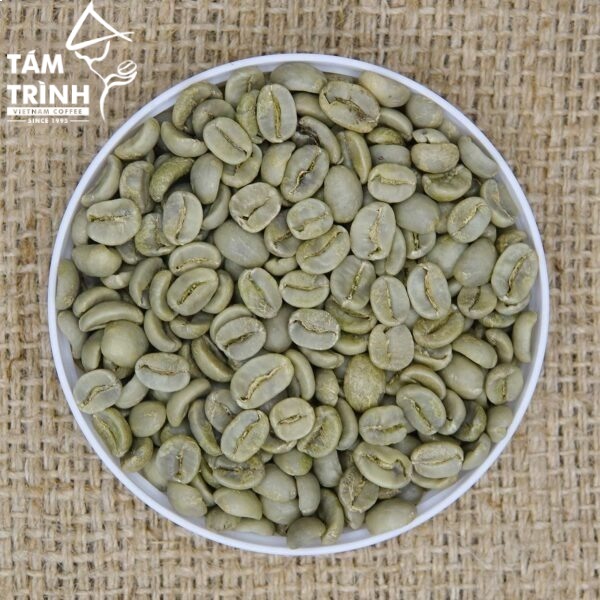
Catimor beans are relatively long and flat, with uniform sizing. When processed and graded according to export standards, Catimor commonly reaches Screen 16–18 with a low defect rate.
Catimor is often cultivated in high-altitude regions such as Cau Dat and certain areas of Son La, where it demonstrates good growth and relatively stable adaptability. In terms of productivity, Catimor provides more stable yields than Bourbon and Typica.
Arabica Catimor Flavor Profile
Catimor generally has a balanced flavor profile with moderate acidity, medium body, and a clean finish. When cultivated at a suitable elevation and selectively harvested at full ripeness, Catimor may develop subtle fruit, caramel, or chocolate notes.
Commercial Catimor lots generally achieve cupping scores of approximately 80–83 points on the SCA scale. Meanwhile, lots produced in Cau Dat or regions above 1,500 meters may reach 84–86 points if the cherries are selectively harvested at full ripeness and processed according to proper procedures.
Applications of Catimor Coffee
Thanks to its stable supply and reasonable price, Catimor is widely used in commercial roasted coffee, espresso blends, drip bags, and green coffee exports.
It is also a popular choice for roasters seeking to develop competitively priced Arabica product lines.
2. Arabica Bourbon Coffee
What Is Arabica Bourbon?
Bourbon is one of the oldest Arabica coffee varieties in the world. It originated on Réunion Island (formerly Bourbon Island) and was later introduced to many coffee-producing countries, including Vietnam.
Compared with Catimor, Bourbon is more difficult to cultivate because it is more susceptible to pests and diseases and requires stricter growing conditions. In return, however, Bourbon offers outstanding cup quality and is highly regarded in the specialty coffee segment.
Characteristics of Bourbon Beans
Bourbon coffee beans are medium-sized, rounder than Typica beans, and have a relatively uniform shape.
The coffee tree has moderate productivity but requires cultivation at elevations above 1,200 meters, where the climate is cool and there is a significant difference between daytime and nighttime temperatures.
Bourbon is mainly cultivated in Cau Dat (Da Lat) and several high-altitude areas of Son La.

Arabica Bourbon Flavor Profile
Bourbon is famous for its high sweetness, bright acidity, and elegant floral aroma.
Depending on the growing region and processing method, Bourbon may express notes of red fruits, honey, caramel, citrus fruits, and flowers.
Its body is silky and well-balanced, with a long, sweet aftertaste.
High-quality Bourbon lots typically achieve 84–87 SCA points, while exceptional micro-lots may receive even higher scores.
Applications of Bourbon Coffee
Bourbon is commonly used for:
- Specialty Coffee
- Single Origin Coffee
- Pour Over
- Filter Coffee
- Premium roasted coffee products
Because of its limited production and excellent cup quality, Bourbon is often sold at significantly higher prices than commercial Arabica.
3. Arabica Typica Coffee
What Is Arabica Typica?
Typica is one of the oldest Arabica coffee varieties and is considered the genetic foundation of many modern Arabica varieties.
Although Typica has relatively low productivity and is susceptible to coffee leaf rust, it remains one of the most highly valued coffee varieties because of its outstanding cup quality.
In Vietnam, Typica is cultivated on a limited scale in several high-altitude regions to serve the specialty coffee market.
Characteristics of Typica Beans
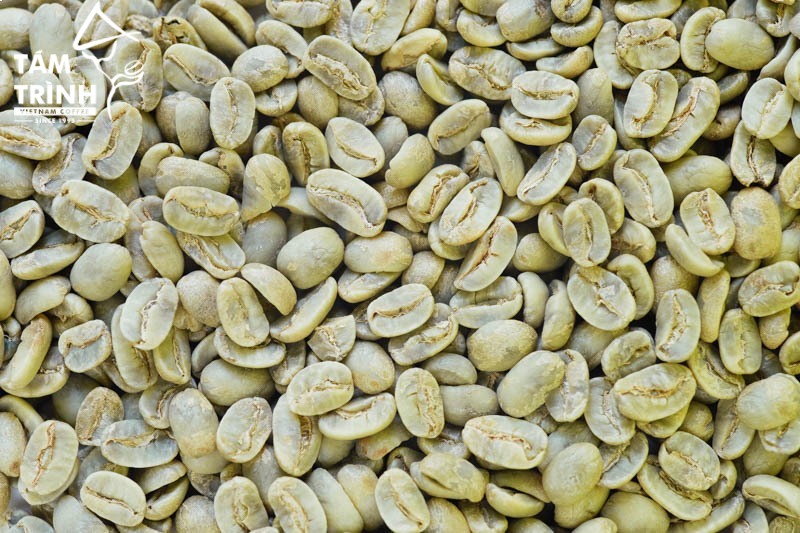
Typica beans are long, slender, and slightly larger than Bourbon beans.
The coffee tree grows tall with widely spaced branches and requires careful cultivation.
Compared with Catimor, Typica has lower productivity but delivers superior cup quality.
Arabica Typica Flavor Profile
Typica is renowned for its elegant and refined flavor profile.
Typical tasting notes include:
- Floral aroma
- Citrus fruits
- Stone fruits
- Honey
- Brown sugar
- Tea-like finish
Its acidity is bright and delicate, while the body is light to medium with a clean finish.
Many Typica lots achieve 85–88 SCA points, and outstanding lots may score above 90 points.
Applications of Typica Coffee
Typica is mainly used for:
- Specialty Coffee
- Competition Coffee
- Micro-lot Coffee
- Premium Single Origin Coffee
Due to its limited production and exceptional quality, Typica has a high commercial value in the international coffee market.
4. Arabica Moka Coffee
What Is Arabica Moka?
Moka (or Mocha) is a natural mutation of the Bourbon variety and is considered one of the rarest Arabica coffee varieties in Vietnam. Due to its low productivity, poor resistance to pests and diseases, and demanding cultivation requirements, Moka is grown only on a limited scale, mainly in Cau Dat, Da Lat.
Although difficult to cultivate, Moka is highly appreciated for its exceptional cup quality and distinctive flavor profile, making it a sought-after coffee in the specialty coffee market.
Characteristics of Moka Beans
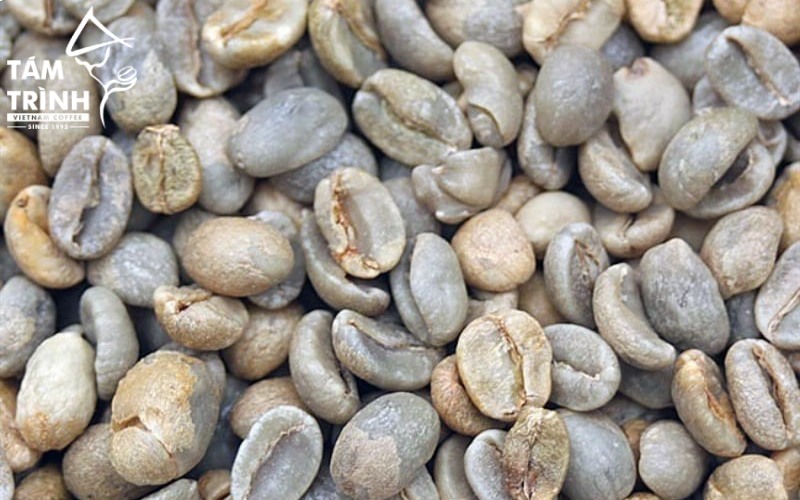
Moka beans are smaller than Catimor, Bourbon, and Typica beans.
The beans have a relatively round shape with a short center crease. Moka trees grow slowly, produce low yields, and require cool climates, fertile soil, and meticulous cultivation techniques to achieve optimal quality.
Arabica Moka Flavor Profile
Moka is considered one of the Arabica varieties with the most complex flavor profiles.
Depending on the growing region and processing method, Moka may exhibit notes of:
- Flowers
- Ripe fruits
- Berries
- Chocolate
- Honey
Its acidity is bright and elegant, the body is smooth, and the aftertaste is long-lasting.
Many Moka lots achieve 85–88 SCA points, while exceptional lots may receive even higher scores.
Applications of Moka Coffee
Moka is primarily used for:
- Specialty Coffee
- Premium Single Origin Coffee
- Hand Brew
- Filter Coffee
- High-end coffee competitions
Due to its limited production and exceptional quality, Moka is one of the highest-value Arabica varieties in Vietnam.
Comparison of the Four Arabica Coffee Varieties in Vietnam
| Criteria | Catimor | Bourbon | Typica | Moka |
| Origin | Timor Hybrid × Caturra | Bourbon Island (Réunion) | Original Arabica variety | Natural mutation of Bourbon |
| Productivity | High | Medium | Low | Very low |
| Disease Resistance | High | Medium | Low | Low |
| Cultivation Difficulty | Easy | Difficult | Difficult | Very difficult |
| Bean Size | Medium | Medium | Large | Small |
| Acidity | Medium | Bright | Bright | Bright |
| Body | Medium | Medium | Light to Medium | Smooth |
| Typical Flavor Notes | Chocolate, Caramel | Honey, Floral, Fruity | Citrus, Floral, Tea-like | Floral, Berries, Chocolate |
| Typical SCA Score | 80–84 | 84–87 | 85–88 | 85–88 |
| Main Applications | Commercial Coffee, Espresso Blend | Specialty Coffee | Single Origin | High-end Specialty Coffee |
Main Arabica Growing Regions in Vietnam
Vietnam’s Arabica coffee is primarily cultivated in high-altitude regions where the climate is cool and suitable for the development of premium-quality coffee. Each growing region possesses unique natural conditions, creating distinctive flavor profiles and commercial value.
Cau Dat, Da Lat, Lam Dong
Cau Dat is considered the most famous Arabica-growing region in Vietnam. Located at an altitude of 1,450–1,650 meters above sea level, the area enjoys cool temperatures year-round, fertile basalt soil, and a significant difference between daytime and nighttime temperatures.
These natural conditions allow coffee cherries to ripen more slowly, enabling the beans to accumulate more sugars and flavor compounds.
Arabica from Cau Dat is well known for its bright acidity, floral aroma, caramel sweetness, clean cup, and balanced body.
Today, Cau Dat is one of Vietnam’s most important production areas for specialty Arabica coffee and is highly regarded by international coffee roasters.
Lam Dong
Lam Dong is Vietnam’s largest Arabica-producing province, accounting for approximately 50–60% of the country’s total Arabica production.
Arabica is mainly cultivated in Da Lat, Lac Duong, Lam Ha, Di Linh, and Bao Loc.
Depending on elevation and processing methods, Lam Dong Arabica commonly displays notes of chocolate, fruit, caramel, and citrus with medium to bright acidity.
Thanks to its stable production and consistent quality, Lam Dong Arabica is widely used for premium roasted coffee, espresso blends, and green coffee exports.

Son La
Son La is currently the largest Arabica-growing region in northern Vietnam, with a cultivation area of more than 33,000 hectares. Coffee production for the 2025 crop year is estimated at approximately 38,000 metric tons. Thanks to its stable production and competitive costs, Son La has attracted increasing attention from international coffee buyers.
The province features mountainous terrain at elevations of 900–1,200 meters, a cool climate, and cold winters, creating favorable conditions for Arabica cultivation.
Arabica from Son La typically offers a balanced flavor profile with moderate acidity, medium body, and a clean finish. Common tasting notes include light fruit, chocolate, and subtle sweetness.
Thanks to its stable quality and reliable supply, Son La Arabica is suitable for commercial coffee, espresso blends, and premium roasted coffee.
Dien Bien
Dien Bien currently has approximately 4,000–5,000 hectares of Arabica coffee, producing around 6,000 metric tons of green coffee beans annually.
Although its production scale is smaller than Son La and Lam Dong, Dien Bien is regarded as one of Vietnam’s most promising regions for specialty coffee development.
The region lies at elevations of 900–1,200 meters, with a cool climate and significant day-to-night temperature variation. These conditions allow coffee cherries to mature more slowly and develop better flavor characteristics.
Arabica from Dien Bien is known for its light fruit notes, bright acidity, clean finish, and, in some high-quality lots, distinctive floral characteristics.
Many international coffee roasters consider Dien Bien a promising origin for Specialty Coffee, Single Origin Coffee, and Premium Blend Coffee.
Quang Tri / Khe Sanh
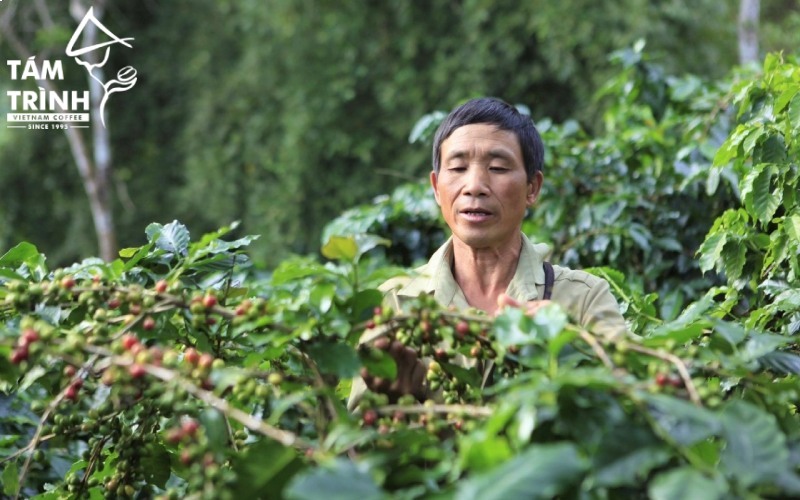
Khe Sanh, located in Quang Tri Province, is one of Vietnam’s most distinctive Arabica-growing regions.
Arabica has been cultivated here for several decades, covering approximately 4,000–5,000 hectares, with an annual production of 3,000–4,000 metric tons of green coffee beans.
Coffee-growing areas in Quang Tri are located at elevations of 600–800 meters above sea level, which is relatively low for Arabica cultivation. However, thanks to a substantial day-to-night temperature difference of 7–9°C, an average annual temperature of 22°C, and annual rainfall of approximately 2,262 mm, Arabica has adapted well to the local natural conditions.
As a result, Khe Sanh Arabica has developed a unique identity compared with Arabica grown in other regions of Vietnam.
Arabica from Khe Sanh generally has a fuller body than Arabica from many other Vietnamese origins. Typical flavor characteristics include chocolate, herbal notes, and a long-lasting finish.
Because of its rich body and distinctive flavor, Khe Sanh Arabica is commonly used in Commercial Arabica, Espresso Blends, and Specialty Blends to enhance the depth and complexity of the final cup.
Tám Trình Coffee: Arabica Coffee Supplier from Lam Dong
With more than 30 years of experience in the coffee industry and over 17 years of international trading, Tám Trình Coffee is currently a supplier of Arabica and Robusta coffee to numerous domestic and international partners.
Located in Lam Dong—Vietnam’s largest Arabica-growing region—Tám Trình Coffee has the advantage of direct access to key production areas such as Da Lat, Cau Dat, and Lac Duong. This enables the company to control quality from harvesting and processing through to export.
Tám Trình Coffee has developed a sustainable coffee supply chain through production partnerships with more than 3,000 farming households in Lam Dong. By working directly with farmers, the company is able to control quality from cultivation, harvesting, and processing to ensure consistent raw material quality throughout every crop season.
The Tám Trình Coffee factory is equipped with a modern processing system with an annual processing capacity of approximately 25,000 metric tons of coffee.
In addition to Washed Arabica, Honey Arabica, and Natural Arabica green coffee beans, Tám Trình Coffee also supplies Anaerobic Fermented Arabica to meet the diverse requirements of coffee roasters, traders, and international importers.
Tám Trình Coffee continues to improve raw material quality while enhancing the value of Vietnamese Arabica in the global market.
FAQ: Arabica Coffee Growing Regions in Vietnam
Where is Arabica coffee grown in Vietnam?
Arabica coffee in Vietnam is mainly grown in high-altitude regions such as Lam Dong, Cau Dat, Son La, Dien Bien, and Quang Tri.
Which Arabica-growing region is the most famous in Vietnam?
Cau Dat, Da Lat (Lam Dong) is one of Vietnam’s most famous Arabica-growing regions thanks to its high elevation, cool climate, and outstanding cup quality.
What makes Lam Dong Arabica unique?
Lam Dong Arabica typically offers excellent aroma, medium to bright acidity, a light to medium body, and a clean finish. It is well suited for premium coffee, filter coffee, and specialty coffee.
What products is Son La Arabica suitable for?
Son La Arabica is suitable for commercial Arabica, base blends, filter coffee, and products requiring a stable supply at competitive costs.
Does the growing region affect Arabica flavor?
Yes. Elevation, climate, soil, coffee variety, and processing method all directly influence the flavor profile of Arabica after roasting.
Does Tám Trình Coffee supply Arabica coffee?
Yes. Tám Trình Coffee is an Arabica coffee supplier in Lam Dong, providing Arabica green coffee beans, roasted Arabica coffee, and Washed, Natural, and Honey Arabica products for domestic and international customers.