


What Is Robusta Honey Coffee? Characteristics, Flavor, and Processing Method
As the coffee industry continues to focus on quality improvement, Robusta Honey has attracted increasing attention from coffee roasters and import partners. Thanks to the Honey Process, the coffee beans retain their natural sweetness, balanced flavor, and high commercial value. This article will help you better understand Robusta Honey coffee.
What Is Robusta Honey Coffee?
Robusta Honey is coffee processed using the Honey Process method. The key characteristic of this method is that after harvesting, the outer skin of the coffee cherry is removed while the mucilage surrounding the bean is retained. The term “Honey” does not mean that honey is added to the coffee. Instead, it refers to the natural sticky mucilage that remains around the bean after the outer skin has been removed.

With three variations—Yellow Honey, Red Honey, and Black Honey—each offers a distinct sensory experience. Yellow Honey provides balanced sweetness and a delicate aroma; Red Honey delivers a richer profile with deeper sweetness; while Black Honey offers a more intense flavor and a more layered aromatic profile.
Unlike the Natural or Washed methods, the Honey Process is an intermediate processing method that allows sugars and organic compounds in the mucilage to penetrate the coffee bean during the drying process. This creates coffee with natural sweetness, a long-lasting finish, reduced harsh bitterness, and more pronounced notes of cocoa, caramel, and brown sugar.
Robusta Honey Processing Method
Processing Robusta Honey requires greater precision and stricter technical control than traditional processing methods. The process includes the following steps:
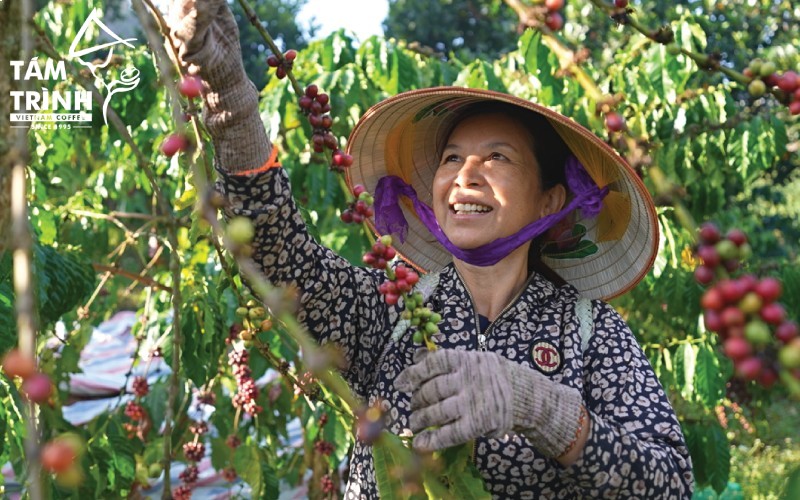
1. Harvesting Ripe Coffee Cherries
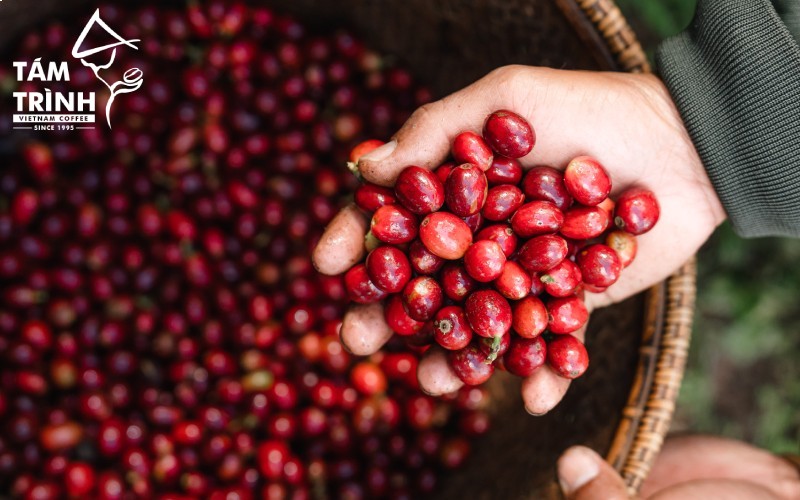
To achieve natural sweetness and a clean flavor profile, coffee cherries must be harvested at optimal ripeness (typically 90–95% fully ripe red cherries). Selective harvesting eliminates the astringency of unripe cherries and reduces the risk of uncontrolled fermentation.
2. Sorting the Coffee Cherries After Harvest
After harvesting, the coffee cherries are sorted using water flotation or mechanical sorting systems to remove floating cherries, insect-damaged cherries, diseased cherries, and dried cherries. This step ensures highly uniform raw materials and provides the foundation for successful Honey processing.
3. Removing the Outer Skin
The coffee cherries are then fed into a depulping machine. At this stage, only the outer skin is removed while the mucilage surrounding the beans is retained. This mucilage contains a high concentration of sugars, pectin, and organic acids, which are the key components responsible for the distinctive flavor of Honey-processed coffee.
4. Controlled Drying
This is considered the most important stage of the entire process. The coffee is dried on raised drying beds or clean drying patios. During drying, the beans must be turned regularly to ensure even drying and protected from excessive sunlight or rain. If the coffee dries too quickly, the flavor cannot fully develop. If it dries too slowly, excessive fermentation or mold growth may occur.
5. Moisture Stabilization
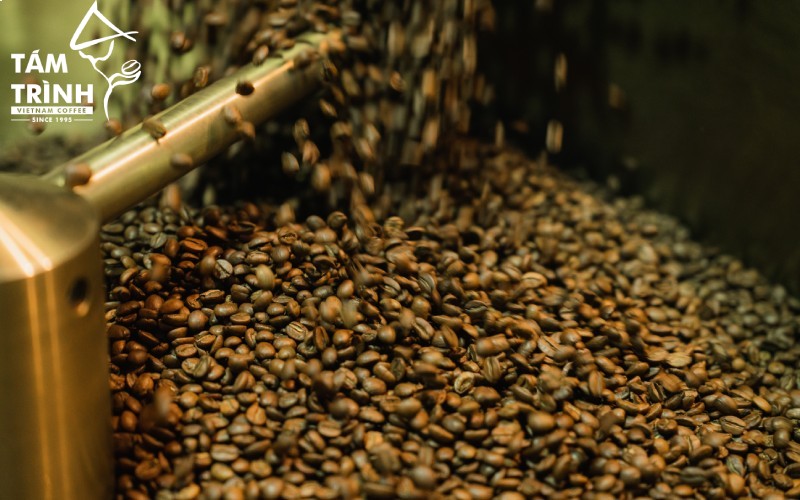
Once the desired dryness has been achieved, the coffee beans require a resting period to stabilize their moisture content evenly, typically between 10% and 12.5%. This step helps prevent cracking, ensuring stable quality during storage and transportation.
6. Grading and Packaging
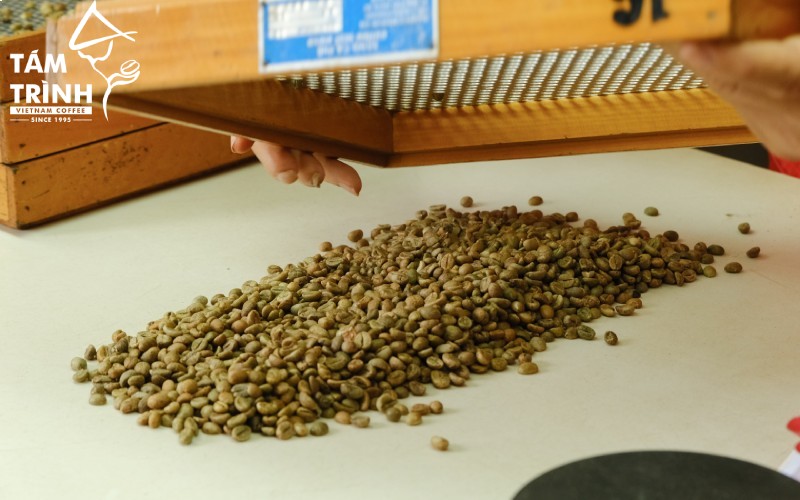
Finally, the coffee beans undergo cleaning to remove impurities, grading according to screen size, and defect removal using color-sorting machines. This process ensures that each lot is uniform and meets the strict quality standards required by export partners.
Factors That Determine the Quality of Robusta Honey
The quality of Robusta Honey depends on many factors. Some of the most important include:
Percentage of Ripe Cherries at Harvest
The riper the coffee cherries, the higher their accumulated sugar content. Therefore, if the percentage of ripe cherries is low, Robusta Honey will lose its natural sweetness and may develop an unpleasant astringent taste.
Mucilage Control
Producers must carefully control the amount of mucilage retained according to climatic conditions. Too much mucilage under high humidity can lead to defective fermentation, while too little mucilage causes the coffee to lose the distinctive characteristics of the Honey process.
Drying Speed
The drying rate directly affects flavor development. Maintaining stable drying temperatures and proper airflow is essential for developing the characteristic notes of caramel and honey.
Moisture Content After Processing
The moisture content after processing plays a major role in determining the quality of Robusta Honey. Maintaining moisture within the 10–12.5% range helps prevent mold growth while preserving coffee quality throughout storage and transportation.
Bean Grading
Robusta Honey is graded using modern screening equipment and color-sorting machines. This process removes defective beans based on color and size, producing a high-quality and uniform coffee lot suitable for B2B customers.
What Makes the Flavor of Robusta Honey Special?
Robusta Honey is the perfect combination of the characteristic strength of Robusta coffee and the gentle sweetness created by the processing method. Coffee enthusiasts often appreciate Robusta Honey for its distinctive flavor characteristics:
- Body: Full and rich, yet very smooth.
- Sweetness: Higher than that of dry-processed Robusta, creating a pleasant sensation.
- Aftertaste: Long-lasting, with a significant reduction in the harsh bitterness commonly associated with Robusta.
- Aroma: Notes such as honey, brown sugar, cocoa, and caramel are often clearly present.
With its consistent quality and ability to create a distinctive flavor impression, Robusta Honey is a suitable choice for coffee roasters, coffee brands, and businesses seeking a higher-value Robusta raw material.

How Is Robusta Honey Different from Robusta Natural and Robusta Washed?
| Criteria | Robusta Honey | Robusta Natural | Robusta Washed |
| Processing Method | The outer skin is removed while the mucilage is retained during drying | The whole coffee cherry is dried intact | The skin is removed, followed by fermentation and washing |
| Sweetness | High | High, with a fruit-forward character | Moderate |
| Body | Full and smooth | Full and strong | Clean and compact |
| Acidity | Soft and balanced | May be more pronounced if fermentation is properly controlled | Cleaner and brighter |
| Flavor | Honey, caramel, cocoa | Ripe fruit, chocolate | Subtle herbal and cocoa notes, without harsh bitterness |
| Risk | Moderate; moisture must be carefully controlled to avoid excessive fermentation | High if drying is uneven or interrupted by rain | Low, but wastewater treatment involves higher environmental costs |
| Applications | Premium coffee, espresso, Fine Robusta | Specialty coffee, cold brew, blends | Commercial espresso blends, RTD coffee, and instant coffee |
Tam Trinh Coffee: Robusta Honey Supplier in Lam Dong
Tam Trinh Coffee is proud to be a pioneering company in Lam Dong in supplying high-quality coffee products under the Farm-to-Export model. With abundant raw material areas located on the basalt plateau, Tám Trình Coffee strictly controls quality from the main harvesting stage to the Honey processing process in accordance with international standards.
The factory is connected with more than 3,000 farming households and has several outstanding strengths:
Selected raw materials: Hand-harvested with 90–95% ripe cherries, ensuring maximum natural sweetness.
Advanced processing: The Honey Process is strictly controlled to preserve the distinctive flavor characteristics.
Consistent quality: A modern machinery system ensures strict export standards.
Comprehensive B2B solutions: Stable supply of Robusta Honey, Fine Robusta, Natural, Washed, and OEM/Private Label services.

Conclusion
The information shared above is intended to help readers understand what Robusta Honey coffee is. This is not merely a processing method, but also a solution for enhancing the value of Robusta coffee beans, delivering a perfect balance between their characteristic boldness and refined flavor.
For businesses seeking a stable supply of high-quality Robusta Honey, connect with Tám Trình Coffee. With its Farm-to-Export model and strict quality-control standards, the company delivers premium cups of coffee to customers.
FAQ: Robusta Honey
What Processing Levels Does Robusta Honey Have?
Robusta Honey is commonly classified according to the amount of mucilage retained and the drying method, with the most common types being Yellow Honey, Red Honey, and Black Honey. Each type has its own characteristics in terms of color, flavor, and complexity, meeting the diverse needs of B2B partners.
How Does the Price of Robusta Honey Compare with Regular Commercial Robusta?
Robusta Honey generally has a higher FOB price than regular Commercial Robusta because it requires higher standards for raw material quality, ripe cherry percentage, processing procedures, and quality control.
Thanks to its superior flavor profile, natural sweetness, full body, and good aftertaste, Robusta Honey is suitable for specialty and commercial premium products, helping businesses increase product value and differentiation.
How Is the Robusta Honey Processing Method Different from Washed and Natural?
The Robusta Honey Process retains part of the natural mucilage on the beans during drying, creating favorable conditions for the development of sweetness and flavor structure.
- Washed: The mucilage is completely removed, creating a clean and bright flavor profile.
- Natural: The whole cherries are dried, producing a full body and high sweetness, but requiring strict control of the cherry-drying process.
- Honey: The mucilage is retained, creating a balance between the clean profile of Washed coffee and the sweetness and body of Natural coffee, with distinctive notes of honey, caramel, cocoa, and brown sugar.
Which Products Is Robusta Honey Suitable For?
Robusta Honey is a suitable raw material for various products, including premium roasted coffee, espresso coffee, machine-brewed coffee, Vietnamese phin coffee, Arabica–Robusta blends, and instant coffee products that require greater intensity and flavor depth.
What Standards Does Tám Trình Coffee Apply to Its Robusta Honey Green Coffee Beans?
Tám Trình supplies Robusta Honey according to high-quality standards, meeting the demand for stable raw materials from B2B partners. The coffee is selected with a ripe cherry ratio of more than 95%, moisture content controlled within the range of 12–12.5%, and accurate Screen 16/18 size grading. Through a strict quality-control process, Tám Trình Coffee ensures a consistent, large-volume supply of Robusta Honey in full-container loads (FCL), suitable for coffee roasters, traders, and domestic and international coffee businesses.