


How Does Tam Trinh Control Coffee Export Quality?
In the coffee export industry, consistent quality is always the key factor that builds credibility. This is also why Tám Trình Coffee focuses on coffee quality control at every stage of production, from managing coffee-growing regions to final delivery. The company is committed to providing clean coffee, consistent quality, and export-standard products.
Why Is Coffee Quality Control Important?
In the global Green Coffee Supply Chain, quality control is the fundamental foundation that shapes financial competitiveness, brand reputation, and the sustainability of long-term B2B contracts.
1. Direct Impact on Export Value
Coffee quality has a significant influence on selling prices in international markets. Shipments that meet key standards such as high uniformity, low defect rates, and consistent quality can achieve higher prices. Conversely, poor-quality coffee may lead to price reductions and a loss of competitive advantage.
2. Maintaining Consistency Between Shipments
In the coffee industry, consistency across shipments is extremely important. Buyers expect coffee to have consistent flavor profiles, moisture levels, and quality specifications to ensure stable roasting and production processes. Therefore, a strict quality control system helps minimize variations between export lots.
3. Reducing Risks During International Transportation
Before reaching customers, coffee must often be stored and transported for extended periods. Without proper moisture control, coffee quality can deteriorate, potentially developing off-flavors or mold. This can result in significant losses for both exporters and importers.
4. Building Trust with Importers
Companies with transparent and reliable quality control systems can more easily gain the trust of international partners. When product quality remains consistent across multiple shipments, customers are more likely to establish long-term partnerships and increase order volumes. This is also an important factor in enhancing a company’s reputation and position in the coffee export market.
Tám Trình Coffee’s Quality Control Process
To ensure premium quality for export shipments, Tam Trinh Coffee has developed a clear and structured quality control process consisting of the following steps:
Controlling Coffee-Growing Regions Through Partnerships with Over 3,000 Farmers
To secure a stable supply and improve traceability, Tám Trình Coffee has established close partnerships with more than 3,000 farming households across key coffee-growing regions in Lam Dong Province.
In addition, the factory’s agricultural engineers work directly with farmers, providing guidance on crop management, biological fertilization, and strict quality control practices from the source. Managing clean and sustainable coffee-growing regions not only ensures stable input quality but also helps meet international sustainability standards.
Standardizing Ripe Cherry Harvesting Criteria
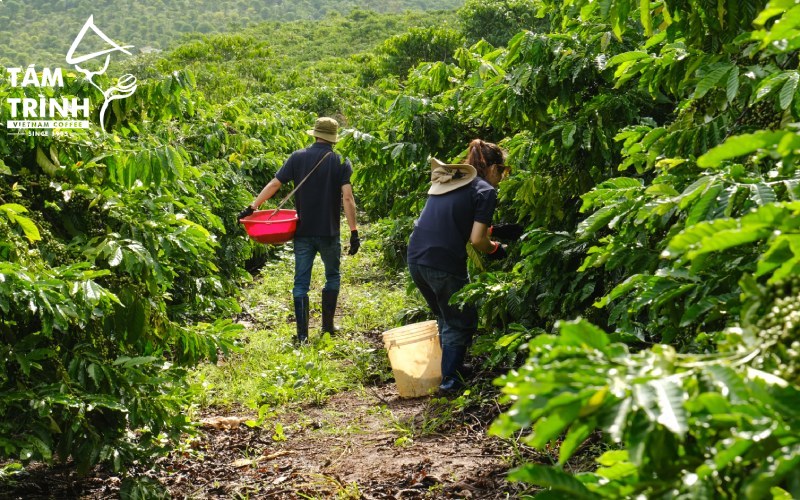
Harvesting plays a decisive role in determining the natural flavor and sweetness of coffee beans. Instead of purchasing coffee harvested through strip-picking methods that include green and immature cherries, Tám Trình Coffee applies strict purchasing standards, requiring a minimum of 95% ripe cherries.
Prioritizing perfectly ripe cherries helps minimize immature and defective beans, significantly improving flavor, body, and color uniformity after processing.
Sorting Raw Materials at the Factory
After coffee cherries are transported from farms to the factory, they undergo an initial mechanical inspection and sorting process to remove impurities.
Coffee cherries are poured into receiving tanks where floating materials such as dry cherries, hollow beans, and dried leaves are immediately separated and discarded.
Any lots that fail to meet ripeness requirements or show signs of disease are isolated and processed separately. This ensures that only high-quality coffee cherries enter the main processing line.
Controlling Processing Methods
To provide a diverse range of coffee products and meet the stringent requirements of professional roasters worldwide, Tám Trình Coffee supports three of the most widely used processing methods at its sourcing regions:
- Natural Processing
- Washed Processing
- Honey Processing
Each processing method is closely monitored using technical parameters to ensure flavor consistency and stable quality throughout the harvest season.
Monitoring Green Coffee Bean Moisture Content
Moisture content is one of the most critical factors in coffee exports.
Tám Trình Coffee is equipped with modern moisture measurement devices to closely monitor coffee throughout the drying process, ensuring moisture levels remain within the standard range of 12.0%–12.5%.
Maintaining accurate moisture content is essential for preventing mold growth, preserving bean integrity, and maintaining quality. Whether stored for extended periods or shipped overseas, the coffee remains in optimal condition.
Grading, Screening, and Defect Removal
Green coffee beans pass through a fully mechanized sorting line for rigorous physical grading:
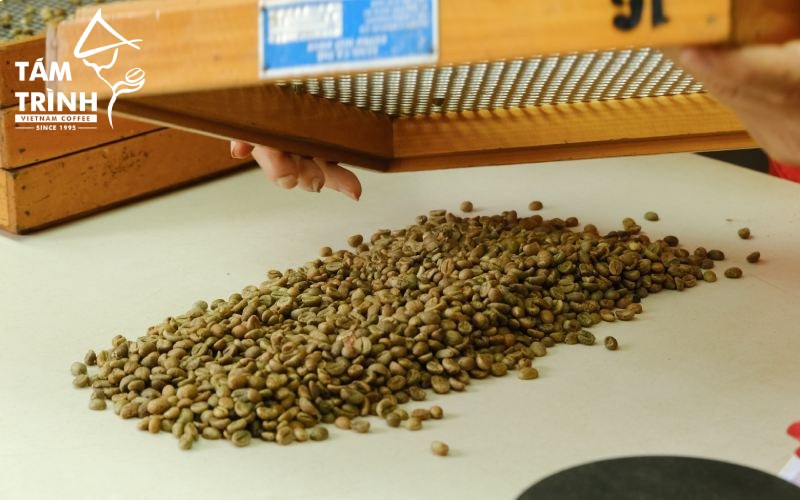
- Round-hole screen graders: Classify bean sizes according to international commercial standards (Screen 14, Screen 16, or Screen 18), with at least 90% retention on the target screen.
- Density separators: Use aerodynamic force to remove hollow, lightweight, and insect-damaged beans.
- Laser color sorters: Utilize high-speed camera sensors to detect and remove black, brown, moldy, and other defective beans that cannot be fully identified by the naked eye, ensuring defect counts meet grade specifications.
Sample Evaluation Before Shipment
Before export, Tám Trình Coffee conducts sample evaluations to assess the overall quality of each lot.
This critical step helps minimize risks and ensures that products meet the requirements of international buyers.
Certified coffee tasting professionals at Tám Trình Coffee roast, grind, and cup representative samples to evaluate:
- Acidity
- Flavor
- Sweetness
- Body
- Balance
This final inspection serves as an important safeguard against complaints, ensuring that the delivered product fully matches the quality sample originally approved by the customer.

Green Coffee Packaging and Storage
Depending on buyer requirements and product segments, green coffee is packaged using two optimal protection standards:
- Standard 60kg natural jute bags for commercial coffee
- Specialized moisture-barrier liners (GrainPro/Ecotact) for Fine Robusta and Specialty Arabica products
The factory’s 5,000m² warehouse system is carefully managed with proper ventilation, warehouse humidity maintained below 65%, and complete protection against cross-contamination risks.
As a result, Tám Trình Coffee operates a clear and professional quality control system, making the company a reliable partner for the international B2B market.
>> See More : Robusta Natural Clean Grade 1 | Green Coffee Beans | Best price
Tám Trình Coffee is proud to be one of the leading green coffee processing factories in Lam Dong Province, operating a 5,000m² export-standard facility. The factory is committed to providing consistent, high-volume Robusta and Arabica supplies that meet the stringent requirements of professional roasters and international export partners.
Tám Trình’s expert team is ready to provide samples for quality evaluation. Contact Tám Trình Coffee today for professional consultation and dedicated support.
Conclusion
Coffee quality control is a crucial factor in enhancing the value and competitiveness of Vietnamese coffee in international markets. With a sustainable development strategy and a comprehensive quality control process from farm to export, Tám Trình Coffee is steadily strengthening its position within the global green coffee supply chain.
FAQ: How Does Tám Trình Control Coffee Quality?
At which stage does Tám Trình Coffee begin quality control?
The company controls quality from the coffee-growing regions, harvesting, processing, grading, moisture testing, and packaging through to export.
Why is green coffee moisture control important?
Moisture content directly affects storage stability and coffee quality during international transportation. Proper control helps prevent mold growth and quality deterioration.
Does Tám Trình Coffee support traceability?
Yes. The company collaborates with more than 3,000 farming households to improve traceability and maintain strict control over raw material quality.
Who are Tám Trình Coffee’s customers?
Tám Trình Coffee serves international B2B customers, including traders, importers, distributors, and coffee manufacturers.