


Coffee Price Volatility Due to War: The Advantages of Vietnamese Coffee Compared with Brazil and Colombia
Currently, war, political conflicts, and logistics crises are causing fluctuations in global coffee prices. These factors are affecting supply chains and global supply. In this context, Vietnam is strengthening its role in the coffee export market compared with Brazil and Colombia.
Overview of Global Coffee Prices Amid Market Volatility
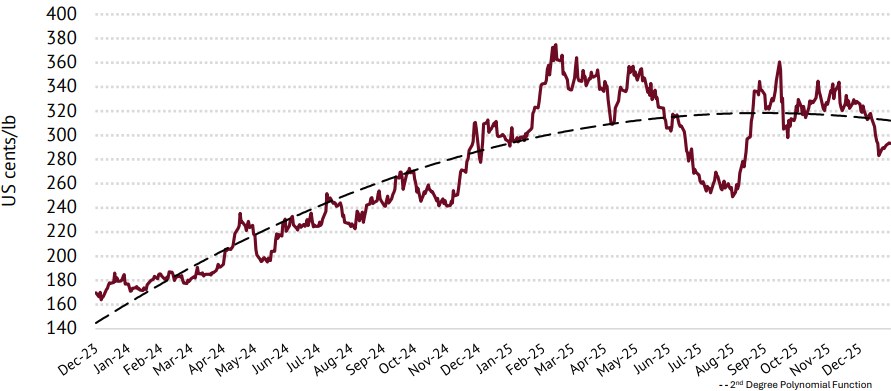
Global coffee prices have recorded a sharp decline from last year’s peak. As of April 2026, Arabica and Robusta prices had dropped by 32% and 41.6%, respectively, compared with their peak levels in February 2025, as oversupply pressure dominated the market.
By mid-2026, prices had declined noticeably. Specifically, Arabica coffee was trading around 270–275 US cents per pound on ICE Futures U.S. in New York, down approximately 24–30% compared with the same period of the previous year. The market is also reflecting expectations of a record harvest in Brazil and improved supply from Vietnam.
However, global coffee price volatility remains high due to weather risks, climate change, political factors, and financial speculation. The global coffee market in 2026 is moving toward a more balanced phase, but it remains sensitive to supply shocks. Prices are expected to fluctuate within a wider range than in previous periods.
Why Does War Cause Coffee Prices to Fluctuate?
War creates strong fluctuations in coffee prices for the following reasons:
Increased transportation and logistics costs: Conflicts in the Middle East and the closure of the Strait of Hormuz force vessels to reroute around Africa. Shipping times may increase by 10–14 days, while freight costs and cargo insurance rates rise sharply.
Higher energy and fertilizer prices: War drives up crude oil prices, which increases the cost of transportation, drying, and coffee processing. The Russia-Ukraine war, conflicts in the Middle East, and the closure of the Strait of Hormuz also disrupt fertilizer supply, pushing production costs higher.
Supply chain disruptions: Conflicts in producing countries may directly disrupt harvesting and export activities.
Currency and trade volatility: War can weaken the currencies of coffee-producing countries, causing farmers to sell at higher prices to offset losses.
The Roles of Brazil, Vietnam, and Colombia in the Coffee Market
Brazil, Vietnam, and Colombia are three of the world’s leading coffee producers and exporters, accounting for up to 60% of global coffee production. Each country holds a distinct strategic role, shaping the balance of supply and demand, pricing, and blending trends among roasting factories worldwide.

The Role of Brazil
Brazil is the dominant giant in the coffee market, with production of around 70 million bags, accounting for nearly 40% of global output. Brazilian coffee consists mainly of two types: Arabica, which accounts for 70–75% of production, and Robusta for the remaining share. Brazil not only leads in scale but also directly influences global coffee prices. Thanks to modern farming technology, large-scale production, and a professional supply chain, Brazil supplies a wide range of coffee, from commercial-grade to premium products.

The Role of Vietnam
Vietnam is the world’s second-largest coffee producer and exporter, with coffee production reaching up to 31 million bags. Export volume is around 27 million bags in the same crop year. Vietnam specializes in Robusta coffee and is the world’s largest Robusta supplier.
This coffee type is widely used in instant coffee and espresso blends. With competitive production costs and high yields, Vietnam plays an important role in the mid-priced to high-quality coffee segment.
The Role of Colombia
Colombia is famous for premium-quality Arabica coffee, with production of about 14 million bags, accounting for 8% of the global market share. Colombia focuses on high-quality Arabica. Thanks to favorable climate conditions and a strict management system, Colombian coffee has a distinctive, consistent flavor and is widely favored.
The Impact of War on Vietnamese Coffee
War and geopolitical conflicts do not take place directly within Vietnam, but they still create significant indirect impacts on the coffee industry. The most obvious impact is the increase in oil prices and logistics costs. When fuel prices rise and sea freight routes are disrupted, transportation costs also increase.
In addition, fertilizer prices, pesticides, and agricultural input costs also fluctuate sharply during periods of political instability. Many raw materials used in global fertilizer production depend on natural gas, oil, or supply from countries affected by conflict. When oil prices rise, farmers’ cultivation costs also increase, directly affecting coffee production efficiency.
However, despite these challenges, Vietnam still has many advantages that help maintain its position in the international market:
- Large Robusta supply
- Stable production
- Strong export system
- More competitive prices than many other countries
- Rapidly growing global demand for Robusta
In a difficult global economic environment, roasting factories tend to optimize costs by increasing the proportion of Robusta in their blending formulas. This helps demand for Vietnamese Robusta continue to grow.
The Impact of War on Brazilian Coffee
As the world’s leading coffee producer and exporter, any fluctuation in Brazil strongly affects global coffee prices. When war drives up raw material and transportation costs, coffee export prices also increase.
In particular, the Russia-Ukraine war is one of the biggest factors affecting Brazil. Russia and Belarus account for 50% of Brazil’s fertilizer supply. The outbreak of war caused fertilizer prices to rise sharply, pushing coffee production costs higher. Conflicts in the Middle East have also increased energy and fertilizer prices, adding further pressure on Brazilian farmers.
The Impact of War on Colombian Coffee
Although Colombia is not directly involved in major wars, its coffee industry is still affected in several ways:
Production costs increase due to higher fertilizer and energy prices caused by the Russia-Ukraine war.
Export logistics and shipping are disrupted because Middle East tensions force vessels to reroute around Africa.
Trade risks increase because war creates global uncertainty, leading to stronger speculation on commodity exchanges and causing Arabica prices to fluctuate sharply.
Some coffee-growing regions in Colombia are affected by internal armed conflicts, increasing risks for farmers.
Comparing Vietnamese Coffee with Brazil and Colombia
| Comparison Criteria | Vietnamese Coffee | Brazilian Coffee | Colombian Coffee |
|---|---|---|---|
| Main coffee type | Robusta | Arabica | Arabica |
| Market segment and application | Suitable for instant coffee, espresso blends, mass commercial coffee, and industrial processing materials | From mass-market to premium segments, commercial roasting, and specialty coffee | Premium segment, specialty coffee, and single-origin specialty coffee |
| Competitive advantage | Competitive pricing and stable supply | Very large production scale | Distinctive flavor |
| Logistics capacity | Developed seaport and export system, convenient access to Asian markets | The world’s largest-scale transportation and export capacity, with a logistics network serving very large cargo volumes | Seaport system connected to both the Caribbean and Pacific, favorable for exporting high-quality Arabica but under pressure from mountainous terrain and domestic transportation costs |
| Advantage during volatile periods | Very high | Highly exposed to global price volatility | Under cost pressure in the premium segment |
Tam Trinh Coffee: Green Coffee Processing and Export Factory in Lam Dong
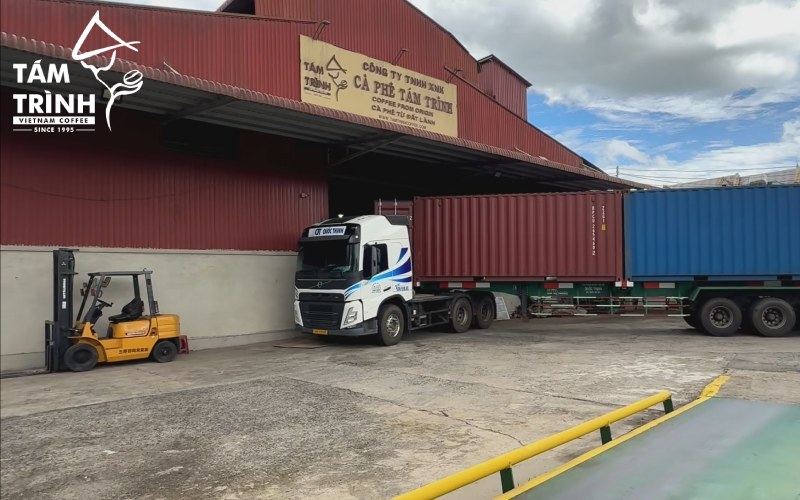
Tam Trinh Coffee is a green coffee processing and export factory in Lam Dong, supplying Robusta, Fine Robusta, and Arabica to international markets. With a modern processing system, Tam Trinh can apply multiple processing methods such as Washed, Natural, and Honey Process to meet the diverse needs of roasting factories.
The company currently works with more than 3,000 farming households in the Central Highlands, helping ensure stable supply, quality control from the growing region, and stronger traceability. Thanks to this, Tam Trinh Coffee has become a trusted partner of many importers, traders, and roasters in more than 20 countries around the world.
Conclusion
War is creating major changes in global coffee prices. In this context, Vietnam is increasingly affirming its important role thanks to stable supply, Robusta advantages, and strong export capacity. This is also an opportunity for Vietnamese coffee companies to expand market share and strengthen their position in the international market.
FAQ: Coffee Price Volatility Due to War
Why does war increase coffee prices?
War increases transportation, fuel, and cargo insurance costs while also disrupting global supply chains, which often causes strong fluctuations in coffee prices.
Which country has the greatest influence on global coffee prices?
Brazil has the greatest influence because it has one of the largest coffee production volumes in the world, especially in Arabica.
What advantages does Vietnam have during periods of coffee price volatility?
Vietnam has advantages in large Robusta supply, competitive pricing, stable production, and strong export capacity.
Why is demand for Robusta increasing?
Many factories are increasing Robusta usage to optimize production costs amid rising Arabica prices and higher logistics costs.