


Famous Arabica Coffee-Growing Regions in Vietnam
In the global coffee industry, Arabica is considered the “gold standard” thanks to its refined flavor, bright acidity, and remarkable ability to express the unique characteristics of its origin. Today, Vietnamese Arabica is gaining increasing recognition from coffee roasters, importers, and the international specialty coffee market.
Understanding the characteristics of each Arabica-growing region in Vietnam enables businesses to select the most suitable coffee origins and develop effective sourcing strategies throughout the supply chain. Below are Vietnam’s most renowned Arabica-producing regions, along with their production capacity, quality characteristics, and commercial potential.
Overview of Arabica Coffee in Vietnam
While Vietnam is globally recognized for its dominance in Robusta production, the country is gradually establishing its position on the world Arabica map through its premium and specialty coffee segment.
Although Arabica accounts for only around 10% of Vietnam’s total coffee production, high-altitude microclimate regions such as Lam Dong (especially Cau Dat and Tram Hanh), Son La, Dien Bien, and Quang Tri produce Arabica beans with vibrant acidity and exceptional cup cleanliness, making them highly sought-after by specialty coffee roasters worldwide.
Is Arabica Coffee Popular in Vietnam?
Compared to Robusta, Arabica occupies a relatively modest cultivation area in Vietnam, covering approximately 60,000 hectares, equivalent to nearly 10% of the country’s total coffee-growing area.
According to Vietnam’s coffee industry statistics, Arabica contributes approximately 5–7% of the nation’s total coffee production. During the 2024–2025 crop year, Vietnam produced nearly 30 million bags of coffee (equivalent to approximately 1.8 million metric tons), of which Arabica production was estimated at 100,000–120,000 metric tons.

Vietnamese Arabica – Tám Trình Coffee
However, within the premium coffee segment, Vietnamese Arabica plays an increasingly important role by delivering greater commercial value. It is primarily produced for the specialty coffee, premium coffee, and high-end roasted coffee markets. International coffee roasters frequently use Vietnamese Arabica for both single-origin offerings and coffee blends.
Ideal Conditions for Growing Arabica Coffee
| Factor | International Ideal Standard | Conditions in Vietnam | Technical Significance for Bean Quality |
| Altitude | 800–2,200 masl | 800–1,650 masl (Cau Dat, Tram Hanh, Lac Duong: 1,450–1,650 masl) | Lower atmospheric pressure produces denser, harder beans with a compact cellular structure. |
| Temperature Range | 15–24°C | 14–22°C (day-night temperature difference of 8–10°C) | Extends cherry maturation by 2–3 weeks, allowing greater accumulation of sucrose and natural organic acids. |
| Rainfall & Humidity | 1,500–2,500 mm/year | 1,700–2,200 mm/year (seasonal rainfall distribution, average humidity around 80%) | Provides sufficient moisture for uniform flowering and fruit development while reducing premature fruit drop caused by heat stress. |
| Soil | Volcanic soil, Clay loam | Deep ancient basaltic red soil (Ferralsols), slopes below 15°, soil depth over 1 meter | Excellent drainage prevents root diseases, while abundant organic matter, potassium, and phosphorus contribute to richer cup complexity. |
| Harvesting Method | Selective Harvesting | Hand-picking only ripe cherries | Eliminates astringency from green cherries and off-flavors from overripe fruit, ensuring a clean cup profile. |
These conditions allow coffee cherries to mature more slowly, enabling the beans to accumulate higher levels of sugars and aromatic compounds, ultimately producing the distinctive flavor profile characteristic of premium Arabica coffee.
Arabica Coffee-Growing Regions in Vietnam
Cau Dat, Da Lat, Lam Dong – Vietnam’s Most Famous Arabica Region
Why Is Cau Dat Famous for Arabica Coffee?
Cau Dat is widely recognized as Vietnam’s most renowned Arabica-producing region.
Its greatest advantage lies in its high elevation combined with a cool climate throughout the year. These conditions slow the maturation of coffee cherries, allowing the beans to accumulate more sugars and flavor compounds. This natural advantage is one of the key reasons behind the exceptional quality of Cau Dat Arabica.
Today, Cau Dat contributes a significant share of Lam Dong Province’s Arabica production, with annual green coffee output estimated at 4,500–6,000 metric tons.
Natural Conditions of Cau Dat
Located at an elevation of approximately 1,450–1,650 meters above sea level, Cau Dat experiences substantial day-night temperature variations, with average temperatures ranging from 15–22°C, annual rainfall between 1,700–2,000 mm, and fertile basaltic red soil.
These natural conditions provide an ideal environment for Arabica cultivation. Furthermore, with more than 100 years of coffee-growing history, Cau Dat has become one of Vietnam’s leading producers of specialty-grade Arabica that is highly regarded in international markets.
Distinctive Flavor Profile
Based on rigorous cupping evaluations conducted by certified Q Graders in professional laboratories, deeply processed Cau Dat Arabica (Washed and Honey Process) presents a remarkably refined sensory profile capable of competing confidently with premium Central American Arabicas.
Acidity
The coffee exhibits bright, crisp Malic Acidity, reminiscent of fresh green apples, complemented by delicate Citric Acidity that evokes subtle citrus notes.
Sweetness & Body
Its sweetness is pronounced, featuring notes of brown sugar, caramel, and natural honey. The body ranges from juicy to silky, delivering an elegant and well-balanced mouthfeel.
Clean Cup
Cau Dat Arabica consistently achieves high SCA cupping scores thanks to its exceptionally clean cup profile. Advanced mechanical grading and laser color-sorting technologies remove defective beans, ensuring outstanding consistency and purity.
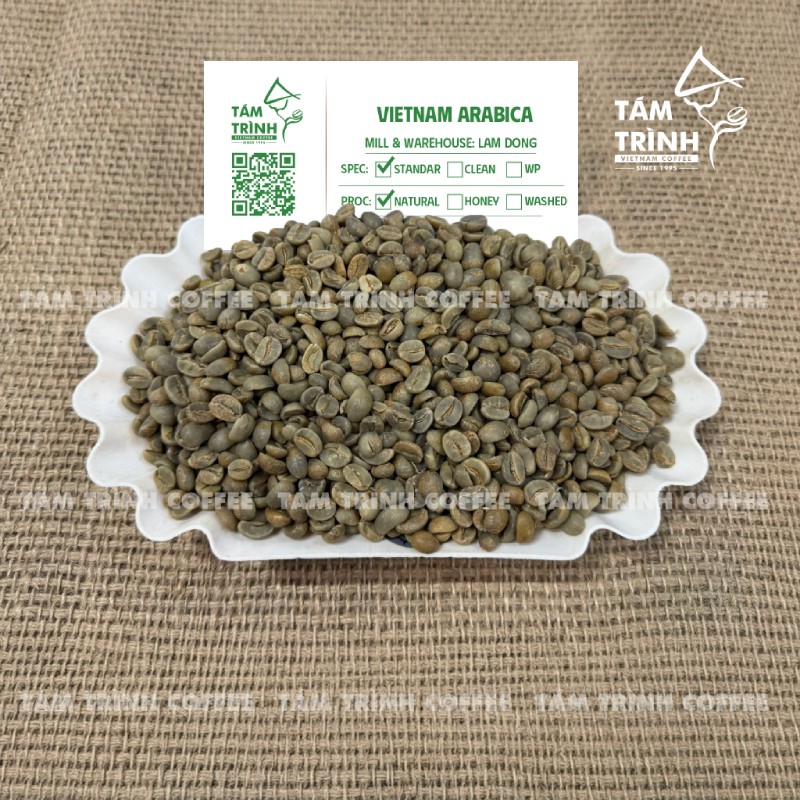
Commercial Applications
Cau Dat Arabica green coffee offers two strategic solutions for both industrial coffee roasters and third-wave specialty coffee businesses.
Premium Single-Origin & Specialty Coffee
With over 100 years of cultivation history and micro-lots achieving SCA scores of 80–84 points, Cau Dat Arabica is an ideal choice for premium single-origin coffee products designed for manual brewing methods such as:
- Pour-over
- Filter Coffee
- Premium Cold Brew
These products allow coffee businesses to maximize product differentiation and profit margins.
A Strategic Component for Premium Espresso Blends
For large F&B chains and commercial coffee roasters, Cau Dat Arabica serves as a strategic blending component.
When blended with Fine Robusta from Lam Dong using carefully balanced ratios, it contributes vibrant acidity, elegant floral aromas, and a smoother finish to espresso while optimizing raw material costs compared to imported Arabica coffees.
Lam Dong – Vietnam’s Most Important Arabica Coffee-Growing Region
Lam Dong is Vietnam’s largest Arabica-producing province, accounting for approximately 50–60% of the country’s total Arabica production. The province has around 17,000 hectares of Arabica coffee plantations, primarily concentrated in Da Lat, Lac Duong, and the surrounding highland areas.
Natural Conditions of Lam Dong
High-Altitude Growing Areas (1,200–1,600 masl)
These areas are concentrated in Da Lat, Lac Duong, and the surrounding mountain ranges. They enjoy average temperatures of 14–21°C, annual rainfall of 1,700–2,200 mm, and deep ancient basaltic red soil (red Ferralsols). This region serves as a specialized origin for high-quality and specialty Arabica, where the beans develop exceptionally high density, resulting in the firm Strictly Hard Bean (SHB) structure.
Mid-Elevation Growing Areas (800–1,100 masl)
These transitional zones include Di Linh (Gung Ré, Dinh Trang Hoa communes), Bao Loc (Damb’ri, Dai Lao communes), several highland communes of Lam Ha District bordering Dam Rong, and Duc Trong District.
The climate is warmer, with average temperatures ranging from 20–25°C and significantly more sunshine throughout the year than Da Lat and Lac Duong. These favorable growing conditions promote vigorous tree growth and high biomass productivity.
Annual rainfall ranges from 2,200–2,800 mm, with Bao Loc and Di Linh recording some of the highest rainfall levels in Vietnam. The region is characterized by weathered basaltic red soil derived from igneous rock formations.
Distinctive Flavor Profile
Lam Dong Arabica is known for its approachable aroma, featuring notes of chocolate and delicate fruit, medium-to-bright acidity, and a clean finish.
Compared to Cau Dat Arabica, Lam Dong Arabica generally offers a more balanced cup profile, making it suitable for a wide range of roasting styles.
Commercial Applications
Lam Dong Arabica is widely used in commercial Arabica, specialty coffee, and various espresso blends.
Thanks to its stable supply and consistent quality, Lam Dong Arabica has become a preferred choice for many international coffee roasters.
Son La – The Largest Arabica Region in Northern Vietnam
Son La is currently the largest Arabica-growing region in northern Vietnam, with more than 33,000 hectares under cultivation. Production for the 2025 crop year is estimated at approximately 38,000 metric tons.
Many international coffee companies have begun sourcing Arabica from Son La due to its reliable production volumes and competitive pricing.

Natural Conditions of Son La
Son La features mountainous terrain at elevations of 900–1,200 meters above sea level, a cool climate, and cold winters, creating favorable conditions for Arabica cultivation.
These natural advantages have established Son La as the largest Arabica-producing region in northern Vietnam.
Distinctive Flavor Profile
Son La Arabica typically offers a well-balanced cup with moderate acidity, medium body, and clean finish.
Flavor notes often include subtle fruit characteristics, chocolate, and a pleasant aftertaste, making it suitable for various coffee applications.
Commercial Applications
Son La Arabica is well suited for coffee blends and commercial coffee products due to its consistent quality across harvest seasons.
Its reliable supply and competitive pricing also make the region increasingly attractive to international coffee buyers.
Dien Bien – An Emerging Arabica Region in Northwest Vietnam
Dien Bien currently has approximately 4,000–5,000 hectares of Arabica coffee, producing around 6,000 metric tons of green coffee beans annually.
Although its production scale is smaller than Son La or Lam Dong, Dien Bien is widely regarded as one of Vietnam’s most promising specialty coffee origins.
Natural Conditions of Dien Bien
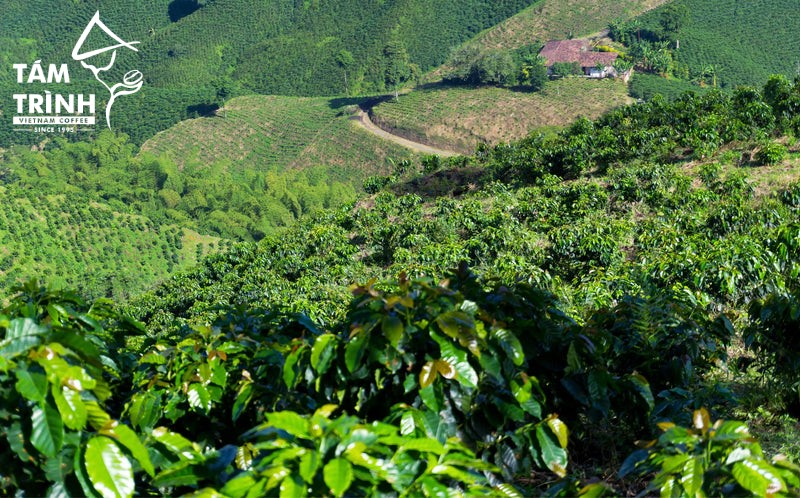
Dien Bien enjoys a cool climate, elevations between 900–1,200 meters, and significant day-night temperature variation.
These conditions slow cherry maturation, allowing coffee beans to accumulate more sugars and flavor compounds.
Distinctive Flavor Profile
Dien Bien Arabica typically features light fruit aromas, bright acidity, and a clean finish.
Some premium lots also display attractive floral notes that are highly appreciated by specialty coffee buyers.
Commercial Applications
Coffee roasters are increasingly interested in Dien Bien Arabica because of its potential for Specialty Coffee, Single-Origin, and Premium Blend products.
The region is also receiving growing investment aimed at enhancing export value.
Quang Tri / Khe Sanh – An Arabica Region with a Distinctive Identity
On Vietnam’s coffee map, Khe Sanh in Quang Tri Province is recognized for producing Arabica with a unique flavor profile.
The region has cultivated Arabica for several decades and currently has approximately 4,000–5,000 hectares, producing around 3,000–4,000 metric tons of green coffee annually.
Natural Conditions of Quang Tri
Coffee plantations in Quang Tri are located at elevations of 600–800 meters above sea level. While this altitude is generally considered below the ideal range for Arabica cultivation, the region benefits from significant day-night temperature differences of 7–9°C, an average annual temperature of 22°C, and average annual rainfall of 2,262 mm.
These climatic conditions allow Arabica coffee to adapt successfully to the region, making Khe Sanh Arabica one of the most distinctive coffee origins in Vietnam.

Distinctive Flavor Profile
Khe Sanh Arabica generally has a fuller body than many other Vietnamese Arabica coffees.
Chocolate notes, herbal characteristics, and a long-lasting finish are among its most recognizable sensory attributes.
Commercial Applications
Thanks to its full body and rich flavor, Khe Sanh Arabica is commonly used in Commercial Arabica, Espresso Blends, and Specialty Blends to add greater depth and complexity to the final cup.
Comparison of Vietnam’s Arabica Coffee-Growing Regions
| Technical Criteria | Lam Dong – Cau Dat & Lac Duong Core Region | Lam Dong – Mid-Elevation Region | Northwest Region (Son La & Dien Bien) | Central Region (Quang Tri – Khe Sanh) |
| Growing Altitude | 1,450–1,650 masl | 800–1,200 masl | 900–1,200 masl | 600–800 masl |
| Climate & Soil | Cool tropical climate year-round (14–22°C), heavy fog, deep ancient basaltic red soil | Warmer climate, high rainfall (2,200–2,800 mm), gently rolling basaltic soil | Subtropical climate, cold winters influenced by monsoon winds, limestone and shale-derived Ferralsols | Tropical monsoon climate with hot dry Lao winds, localized rainfall, yellow-red Ferralsols |
| Primary Processing Methods | Washed, Honey, Anaerobic Fermentation | Fully Washed, Eco-Washed | Traditional Washed with increasing adoption of premium Natural and Honey processing | Traditional Washed, primarily mechanical drying due to rainy harvest season |
| Typical SCA Cup Profile | Bright malic acidity (green apple), floral notes, honey, caramel, deep sweetness, silky body | Balanced cup with dark chocolate, cocoa, roasted nuts, smooth body | Bright citric acidity, herbal notes, medium body, light sweet finish | Full body, low gentle acidity, woody and herbal notes, rustic finish |
| Bean Grade & Applications | Strictly Hard Bean (SHB). Applications: Single-Origin, Specialty Coffee, Micro-lots, Premium Pour-over | Hard Bean (HB). Applications: Premium Blends, High-end Espresso, Imported Arabica substitute | Commercial Grade 1 & Specialty. Applications: Regional Single-Origin, Commercial Espresso Blend | Commercial Grade 2. Applications: Premium Instant Coffee, Traditional Roasted Blends |
| Importer Advantages | Flavor quality comparable to premium Central American Arabica with SCA scores of 80–84 | Large production volume, stable year-round supply, highly competitive pricing, advanced dry-milling logistics | Northern Vietnam’s largest Arabica production with unique cool highland terroir | Historic coffee origin with a distinctive flavor profile suitable for niche markets |
Tám Trình Coffee – A Trusted Arabica Coffee Supplier from Lam Dong
With over 30 years of experience in the coffee industry and more than 17 years of international trading, Tám Trình Coffee supplies both Arabica and Robusta coffee to domestic and international partners.
Located in Lam Dong Province, Vietnam’s largest Arabica-producing region, Tám Trình Coffee enjoys direct access to major coffee-growing areas including Da Lat, Cau Dat, and Lac Duong. This enables the company to control quality from harvesting and processing through to export.
Tám Trình Coffee has developed a sustainable coffee supply chain by partnering with more than 3,000 farming households throughout Lam Dong Province. Through direct collaboration with farmers, the company manages quality from cultivation and harvesting to processing, ensuring consistent coffee quality across every harvest season.
The factory is equipped with modern processing technology capable of handling approximately 25,000 metric tons of coffee annually.
In addition to Washed, Honey, and Natural Arabica green coffee beans, Tám Trình Coffee also supplies Anaerobic Fermented Arabica to meet the diverse needs of coffee roasters, traders, and international importers.
The company continues to improve raw material quality while enhancing the global reputation and value of Vietnamese Arabica coffee.
FAQ: Arabica Coffee-Growing Regions in Vietnam
Where is Arabica coffee grown in Vietnam?
Vietnamese Arabica is primarily cultivated in highland regions such as Lam Dong, Cau Dat, Son La, Dien Bien, and Quang Tri.
Which Arabica-growing region is the most famous in Vietnam?
Cau Dat, Da Lat (Lam Dong Province) is widely regarded as Vietnam’s most famous Arabica-producing region due to its high elevation, cool climate, and exceptional cup quality.
What makes Lam Dong Arabica special?
Lam Dong Arabica is known for its pleasant aroma, medium-to-bright acidity, light-to-medium body, and clean finish. It is well suited for premium coffee, filter brewing, and specialty coffee.
What products is Son La Arabica suitable for?
Son La Arabica is ideal for commercial Arabica, base blends, filter coffee, and products requiring a stable supply at competitive prices.
Does the growing region affect Arabica flavor?
Yes. Altitude, climate, soil, coffee variety, and processing methods all have a direct influence on the final flavor profile after roasting.
Does Tám Trình Coffee supply Arabica coffee?
Yes. Tám Trình Coffee is a trusted Arabica coffee supplier in Lam Dong, offering green Arabica beans, roasted Arabica coffee, and Washed, Natural, and Honey Process Arabica for both domestic and international customers.