


Famous Robusta Coffee-Growing Regions in Vietnam
Vietnam is currently the world’s largest producer and exporter of Robusta coffee, accounting for approximately 38–40% of the total global Robusta supply. In addition to being well known for its production volume, Vietnamese Robusta is increasingly highly regarded for its consistent quality, extensive growing regions, and the development of processing methods such as Natural, Honey, and Washed.
In recent years, instead of focusing only on “Vietnamese Robusta,” many roasters, traders, and importers have begun paying greater attention to the origin of the growing region. The natural conditions, elevation, climate, soil, and processing methods of each locality create significant differences in bean structure, body, sweetness, and flavor profile.
A clear understanding of the characteristics of each growing region will help businesses select the right type of Robusta for each intended use.
Overview of Robusta Coffee in Vietnam
Robusta is Vietnam’s main coffee variety, accounting for approximately 92–95% of the country’s total coffee-growing area and production volume, according to USDA reports. According to data from the Ministry of Agriculture and Environment and the USDA, Vietnam currently has approximately 700,000 hectares of coffee, most of which are distributed throughout the Central Highlands, with key growing regions including Dak Lak, Dak Nong, Lam Dong, Gia Lai, and Kon Tum. According to statistics from the Vietnam Coffee and Cocoa Association (Vicofa), the 2024–2025 crop year ended with an estimated total coffee production of nearly 29.5 million bags, equivalent to more than 1.7 million metric tons, helping Vietnam maintain its position as the world’s largest Robusta-exporting country.
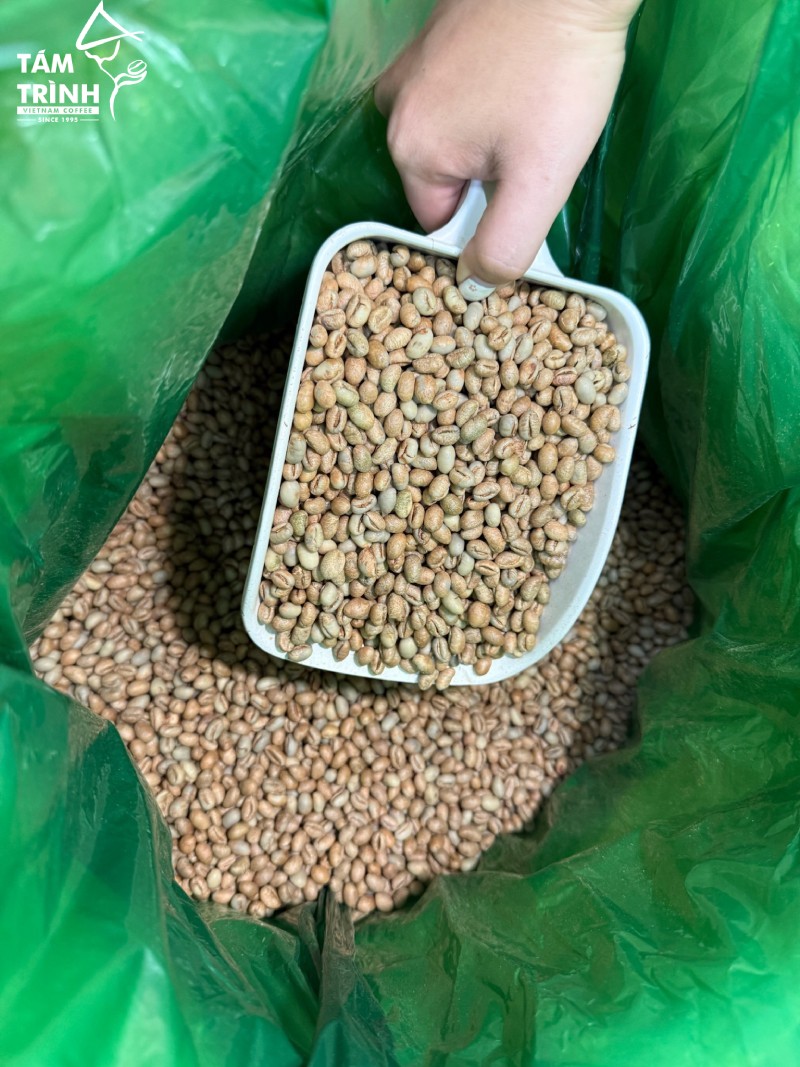
In addition to its outstanding production scale, Vietnamese Robusta is also highly regarded for its stable supply, continuously improving quality, and ability to meet the diverse demands of the market. The beans are classified according to TCVN 4193, meeting the technical requirements of various application segments: Commercial Robusta for instant coffee and RTD coffee production; high-quality Washed, Honey, and Natural Robusta for espresso blends and specialty roasting; and full-lot green coffee beans for OEM and private label businesses that require independent control over the roasting process.
Together with well-developed post-harvest processing systems, logistics, and seaports, Vietnam is currently one of the important links in the global Robusta supply chain, supplying products to more than 80 countries and territories.
Factors That Determine Robusta Coffee Quality by Growing Region
The quality of Robusta beans depends not only on the coffee variety but is also strongly influenced by natural conditions and cultivation techniques. Factors such as basalt soil, elevation, climate, rainfall, and harvesting methods directly determine bean size, bean density, and the flavor profile after roasting.
Basalt Soil
Basalt soil is considered the ideal soil condition for growing Robusta coffee. This type of soil was formed from ancient volcanic activity. It has a deep cultivation layer, good moisture-retention capacity, and is rich in minerals such as potassium, magnesium, and phosphorus. These characteristics help Robusta trees develop strong root systems, absorb nutrients efficiently, and produce coffee beans with a firm structure, uniform size, and full body. Basalt soil also contributes to chocolate and cocoa aromas and a strong aftertaste, which are common characteristics of Vietnamese Robusta.
Growing Elevation
Elevation is one of the important factors that determine the sensory quality of Robusta beans. Globally, Robusta is commonly cultivated at elevations of 500–1,000 m above sea level, while in Vietnam, key growing regions such as Dak Lak, Lam Dong, Gia Lai, Dak Nong, and Kon Tum are mainly located between 400 and 800 m.
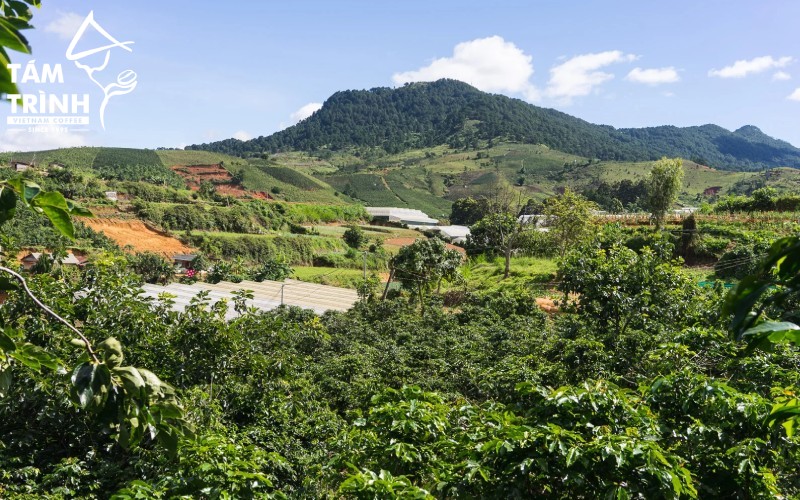
In areas with elevations ranging from 800 to 1,000 m, cooler temperatures help extend the cherry-ripening process, allowing the beans to accumulate more sugars and aromatic compounds. As a result, the coffee beans have high bean density, a firm structure, consistent quality, and the potential to develop Fine Robusta lines with a more balanced, clean, and complex flavor profile.
Climate and Rainfall
Robusta has greater adaptability than Arabica and grows well under average temperatures of 22–26°C with annual rainfall of approximately 1,800–2,000 mm, according to VICOFA technical documents. The Central Highlands has clearly differentiated rainy and dry seasons. The rainy season provides sufficient water for the fruit-development stage, while the dry season helps the trees flower simultaneously and creates favorable conditions for harvesting. Climate stability also affects the accumulation of sugars and the formation of flavors within the coffee beans.
Harvesting and Processing Methods
Robusta quality directly depends on two controlled stages following cultivation conditions: harvesting and post-harvest processing.
Regarding harvesting: the cherries must reach a minimum ripeness rate of 90–95% before harvesting. Green cherries, dried cherries, and foreign matter must be removed during the preliminary sorting stage to reduce the initial defect rate.
Regarding processing: the method, whether Natural, Honey, or Washed, is selected according to the target cup profile and target market segment. The temperature and drying duration are controlled to achieve a maximum moisture content of 12.5% in accordance with TCVN 4193. The beans are classified by screen size, S16 or S18, and defect count according to Grade 1 standards before being packaged for export.
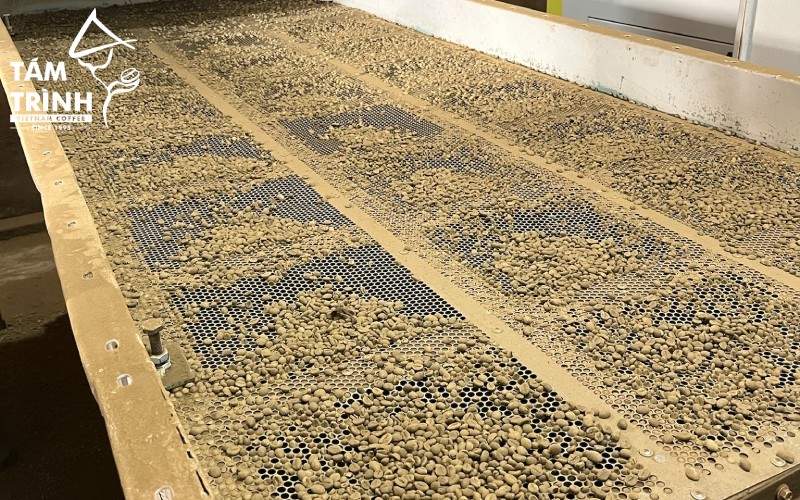
In recent years, thanks to investments in processing technology and quality control, many growing regions in Vietnam have successfully developed Fine Robusta lots with high commercial value, meeting the requirements of the Specialty market and international importers.
| Factor | International Ideal Standard | Conditions in Vietnamese Robusta-Growing Regions | Technical Significance for Bean Quality |
| Terrain Elevation | 400–900 m.a.s.l. (Fine Robusta may reach 1,100 m) | 500–1,000 m.a.s.l. | Moderate elevation combined with stable temperatures helps cherries develop evenly, increases bean density, improves soluble solids content, and creates the full-bodied structure characteristic of high-quality Robusta. |
| Temperature Range | 20°C–28°C | 20°C–26°C, with a day-to-night temperature variation of approximately 6–10°C | Stable temperatures help extend the process of carbohydrate accumulation in the beans, increase natural sweetness, limit the occurrence of underdeveloped beans, and create a more balanced flavor after roasting. |
| Rainfall & Humidity | 1,500–2,500 mm/year | 1,800–2,500 mm/year, with clearly differentiated rainy and dry seasons and average humidity of 75–85% | Adequate rainfall helps the trees grow steadily, while a clearly defined dry season allows the cherries to ripen evenly and creates favorable conditions for harvesting, drying, or Natural processing. |
| Soil & Land | Basalt soil and mineral-rich volcanic soil | Deep red basalt soil with a cultivation layer of more than 1 m, rich in potassium, magnesium, and organic matter, with good drainage | Mineral-rich basalt soil supports strong root development, increases nutrient absorption, and contributes to the chocolate and cocoa aftertaste and the distinctive sweetness of Vietnamese Robusta. |
| Harvesting Technique | Selective Harvesting | Harvesting when the proportion of ripe cherries reaches 95% or higher, while limiting green cherries and foreign matter | Harvesting ripe cherries helps reduce astringency, limit defects during processing, improve the Clean Cup score, and ensure the quality of Fine Robusta for premium roasting. |
Map of Famous Robusta Coffee-Growing Regions in Vietnam
Approximately 90% of Vietnam’s Robusta coffee-growing area is concentrated in the Central Highlands. The five most important coffee-growing regions include:
| Growing Region | Key Characteristics |
| Dak Lak | The capital of Robusta coffee, with the largest production volume in Vietnam |
| Lam Dong | The highest elevation among the five regions, offering conditions that are more suitable for quality control |
| Gia Lai | Large cultivation area with abundant supply |
| Dak Nong | Stable production with many fertile basalt-soil areas |
| Kon Tum | Smaller production scale but strong potential for developing high-quality Robusta |
Each locality possesses different natural conditions, creating the diversity in flavor and commercial value that characterizes Vietnamese Robusta.
Dak Lak – The Capital of Vietnamese Robusta Coffee
Natural Conditions of Dak Lak
Dak Lak is located in the center of the Central Highlands at an average elevation of 400–800 m, with temperatures ranging from 22–24°C and annual rainfall of approximately 1,600–1,800 mm (according to Vnbaolut.net).
The climate is divided into two distinct seasons, with the dry season lasting from November to April, creating favorable conditions for uniform cherry ripening and natural drying after harvest. Stable day-to-night temperature variation helps the beans develop high bean density.
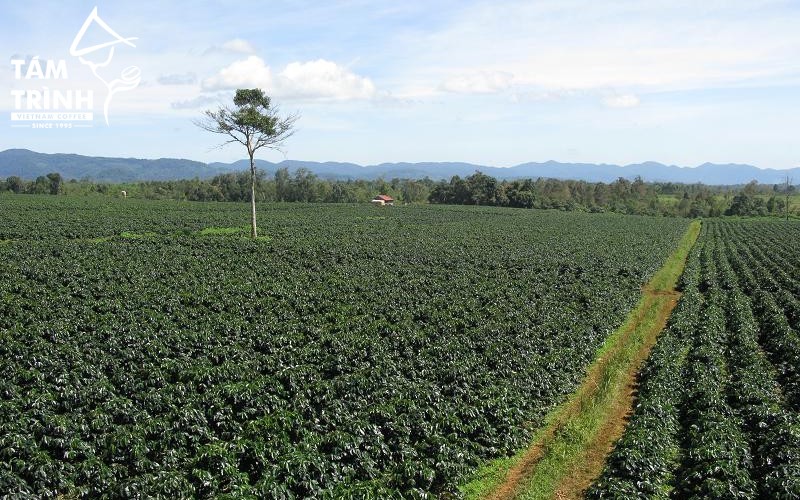
Most coffee plantations are established on deep red basalt soil that is rich in nutrients and has excellent water-retention capacity. These conditions are ideal for the stable growth of Robusta trees and high productivity. In addition to its natural advantages, Dak Lak has a long history of coffee cultivation and the country’s largest concentration of coffee processing and exporting enterprises.
Robusta Coffee Production in Dak Lak
According to the Vietnam Coffee and Cocoa Association, Dak Lak is Vietnam’s largest Robusta-producing region, concentrated in Buon Ma Thuot, Cu M’gar, Krong Ana, and Ea H’leo.
Dak Lak currently has approximately 213,000 hectares of coffee plantations, of which more than 95% is Robusta. The average annual production exceeds 530,000 metric tons of green coffee beans, accounting for nearly 30% of Vietnam’s total coffee production.
It is also the province with the largest number of coffee exporters, processing factories, and well-developed logistics systems supporting the coffee industry.
Distinctive Flavor Profile
Dak Lak Robusta is regarded as the benchmark flavor profile of Vietnamese Robusta thanks to its balanced structure and remarkable consistency across harvest seasons.
The coffee delivers a Full Body, creating a rich and solid mouthfeel in the cup. Dak Lak Robusta is characterized by notes of dark chocolate, cocoa, roasted nuts, caramel, and almond.
Its bitterness is pronounced yet clean, with minimal harshness when processed correctly. The finish is long-lasting, accompanied by the natural sweetness of brown sugar and molasses.
Its high soluble solids content helps produce a thick, stable crema when brewed as espresso, effectively meeting the requirements of commercial coffee roasters.
Commercial Applications
With its large production volume and consistent quality, Dak Lak Robusta serves as a primary raw material for the instant coffee industry, traditional roasted coffee, and Espresso Blends for both domestic consumption and export.
Thanks to its ability to create a full body and excellent crema, this coffee is commonly used as the base component in blending formulas.
In addition, Fine Robusta lots processed using the Honey or Natural methods and scoring above 80 CQI points are also attracting growing interest from Specialty coffee roasters and international importers.
Lam Dong – A Region of High-Quality Robusta and Promising Fine Robusta
Natural Conditions of Lam Dong
Lam Dong is renowned not only for Arabica but also as one of Vietnam’s leading producers of high-quality Robusta. Areas such as Di Linh, Lam Ha, Bao Loc, and Duc Trong are situated at elevations ranging from 700–1,000 m, featuring a cool climate and greater day-to-night temperature variation than many other regions in the Central Highlands.
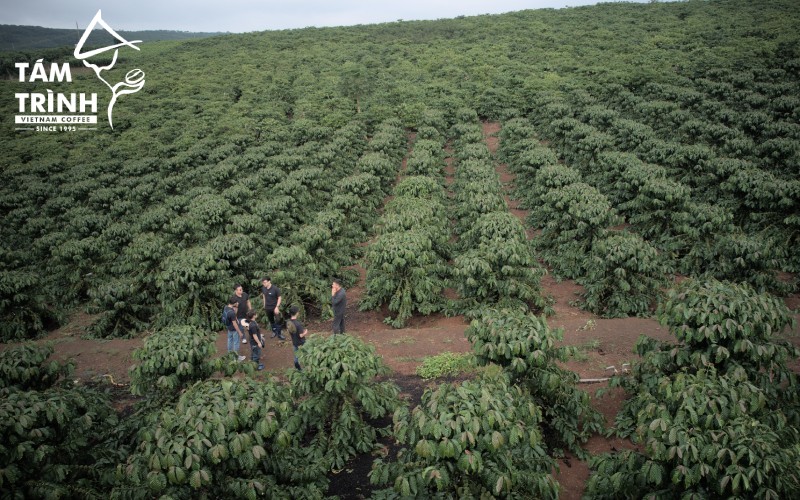
An average temperature of 18–24°C, together with abundant rainfall, allows the coffee cherries to ripen more slowly, extending the accumulation of sugars and aromatic compounds. These conditions are particularly suitable for Honey and Natural processing methods.
Deep red basalt soil combined with annual rainfall of 2,000–2,500 mm enables stable tree growth, prolongs fruit maturation, and improves bean quality.
Robusta Coffee Production in Lam Dong
According to the Lam Dong Department of Agriculture and Environment, following the provincial merger, Lam Dong now has approximately 327,000 hectares of coffee plantations, the majority of which are Robusta.
Coffee production in 2025 exceeded 1 million metric tons, accounting for more than 50.4% of Vietnam’s total coffee production, making Lam Dong one of the country’s largest Robusta-producing regions.
The province is also home to several companies investing in Fine Robusta, Robusta Honey, and Robusta Washed to meet export market demand.
Across the province, nearly 120,000 hectares of coffee plantations have obtained sustainable production certifications, including 4C, Rainforest Alliance, UTZ, VietGAP, and Organic certifications.
In 2025, Lam Dong’s coffee export value reached nearly USD 630 million.
Distinctive Flavor Profile
Thanks to cultivation at higher elevations, Lam Dong Robusta possesses a smoother and more complex sensory profile than traditional Robusta.
The coffee has a Medium to Full Body, featuring pronounced sweetness with notes of caramel, honey, brown sugar, and milk chocolate.
Lots harvested from fully ripe cherries and processed using the Honey or Washed methods may also exhibit notes of honey, ripe fruit, and cocoa.
Gentle malic acidity creates a brighter cup, while the bitterness is softer than that of many traditional Robusta-growing regions. The clean finish with minimal woody notes makes Lam Dong Fine Robusta particularly suitable for the Specialty Coffee segment and premium espresso blends.
>> See More : Green Coffee Beans Tam Trinh Coffee
Commercial Applications
Lam Dong Robusta is well suited for Fine Robusta, Single Origin, and Premium Espresso Blend products thanks to its stable quality and strong compatibility with Washed, Honey, and Natural processing methods.
In roasting applications, this coffee is often blended with Arabica to enhance body while maintaining overall flavor balance.
Gia Lai – A Major Robusta Coffee-Growing Region in the Central Highlands
Gia Lai is one of the provinces with the largest coffee-growing area in the Central Highlands and plays an important role in Vietnam’s Robusta supply chain. With its abundant land resources, stable climate, and favorable cultivation conditions, Gia Lai has become an important source of raw materials for many exporters, coffee roasters, and instant coffee manufacturers.
Natural Conditions of Gia Lai
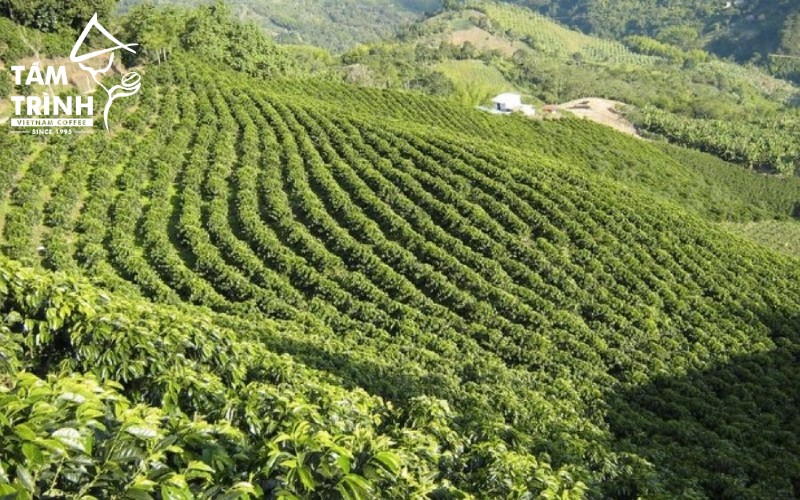
Gia Lai is one of the key Robusta-growing regions in the Central Highlands, with cultivation concentrated in Chu Prong, Ia Grai, Chu Se, Dak Doa, Mang Yang, and Duc Co. Most coffee-growing areas are located at elevations of 600–800 m above sea level, featuring deep, nutrient-rich red basalt soil, an average temperature of 21–25°C, and annual rainfall of approximately 2,000–2,300 mm. In addition, the dry season lasts for 4–5 months, creating favorable conditions for flower bud differentiation, fruit development, and harvesting. The combination of these natural factors enables Robusta trees to grow consistently, achieve high productivity, produce uniform bean quality, and effectively meet the requirements of coffee roasters and exporters.
Robusta Coffee Production in Gia Lai
According to the Gia Lai Electronic Information Portal, the province currently has approximately 107,400 hectares of coffee plantations, of which more than 95% is Robusta. During the 2025–2026 coffee crop, average production reached 3–3.5 metric tons of green coffee beans per hectare, with an estimated total output of 333,250 metric tons.
Thanks to its large cultivation area and concentrated raw material supply, Gia Lai has become an important purchasing region for many coffee exporters and processing factories.
Distinctive Flavor Profile
Gia Lai Robusta stands out for its balanced flavor structure, full body, and sweeter finish compared to many traditional Robusta-growing regions. Its sensory profile typically features notes of chocolate, cocoa, roasted cashew, brown sugar, and dried fruit, while its bitterness is pronounced yet smoother than that of Dak Lak Robusta. Honey- or Washed-processed lots offer excellent cup cleanliness and are well suited for a wide range of blending applications.
Commercial Applications
With its abundant supply and consistent quality, Gia Lai Robusta is widely used in Commercial Coffee, Premium Espresso Blends, instant coffee, and green coffee bean exports. It is also an ideal sourcing region for OEM manufacturers and coffee brands requiring large production volumes with consistent quality. Fine Robusta lots from Gia Lai are increasingly being used in Ready-to-Drink (RTD) beverages and premium roasted coffee products.
Dak Nong – A Robusta Region with Stable Production
Dak Nong has experienced rapid development in its coffee industry over recent years. With its extensive basalt soil and favorable climatic conditions, the province has become one of Vietnam’s major Robusta-producing regions.
Natural Conditions of Dak Nong
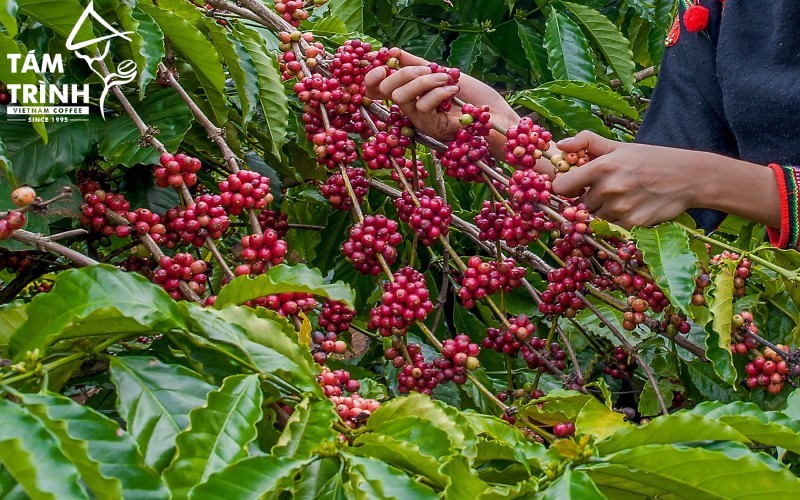
Dak Nong is one of the key Robusta-producing regions of the Central Highlands, with coffee cultivation concentrated in Dak Mil, Dak Song, Cu Jut, Krong No, and Tuy Duc. The region has an average elevation of 500–850 m, stable temperatures of approximately 22–25°C, annual rainfall of 2,000–2,400 mm, mineral-rich red basalt soil, and relatively flat terrain. These natural conditions provide an ideal environment for stable coffee tree growth, high productivity, consistent bean quality, and easier mechanization during production.
Robusta Coffee Production in Dak Nong
According to Lam Dong Newspaper, Dak Nong had approximately 143,000 hectares of coffee plantations in 2025, with average annual production ranging from 330,000 to 350,000 metric tons of green coffee beans, making it one of Vietnam’s largest Robusta-producing regions.
Its large production scale, together with an increasingly well-developed purchasing and processing system, has attracted many coffee exporters to invest in the province, ensuring a stable supply of raw materials for both domestic and international markets.
Distinctive Flavor Profile
Dak Nong Robusta is highly regarded for its bold yet balanced flavor profile, offering Full Body, clean intense bitterness, and notes of cocoa, dark chocolate, caramel, and molasses. Its high soluble solids content creates a thick crema when brewed as espresso, while the finish remains clean and long-lasting. Lots harvested from fully ripe cherries and processed using Honey or Washed methods demonstrate significantly improved sensory quality, meeting the requirements of the Fine Robusta segment.
Commercial Applications
Thanks to its abundant supply and consistent quality, Dak Nong Robusta is widely used in instant coffee production, industrial roasting, Espresso Blends, and green coffee exports. The region is also favored by many importers and OEM manufacturers for long-term supply contracts due to its ability to deliver large production volumes. In addition, Fine Robusta processed using the Honey and Natural methods is gradually establishing its position within the Specialty Coffee market and other value-added export products.
Kon Tum – A Promising Robusta Coffee Region in the Northern Central Highlands
Compared to the other four provinces, Kon Tum has a smaller coffee-growing area but is emerging as a region with significant potential. Several areas with higher elevations and cooler climates allow Robusta trees to develop more slowly, creating favorable conditions for improving bean quality.
Natural Conditions of Kon Tum
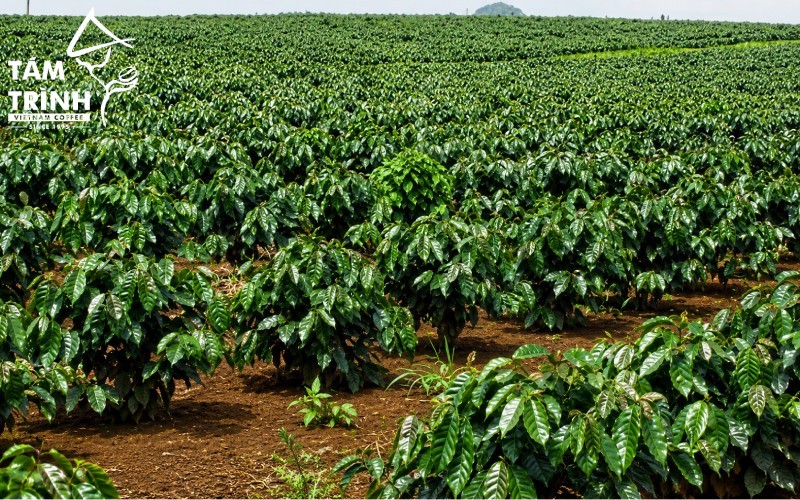
Kon Tum has Robusta-growing areas concentrated in Dak Ha, Dak To, Ngoc Hoi, and Sa Thay, where the average elevation ranges from 700–900 m, the climate is cooler than in many other parts of the Central Highlands, and annual rainfall reaches approximately 2,000–2,300 mm. Combined with fertile red basalt soil, these conditions help prolong fruit development, allowing greater accumulation of sugars and aromatic compounds. Although production is still relatively small, many coffee farmers in Kon Tum have shifted toward selective harvesting and high-quality processing methods to increase the value of their coffee beans.
Robusta Coffee Production in Kon Tum
Kon Tum currently has approximately 30,000–35,000 hectares of coffee plantations, producing an average of 70,000–80,000 metric tons of green coffee beans annually. Compared with other provinces in the Central Highlands, its production scale remains modest. However, the province is focusing on improving quality, traceability, and sustainable cultivation rather than expanding its cultivation area, thereby establishing a solid foundation for the development of premium Robusta.
Distinctive Flavor Profile
Thanks to its favorable ecological conditions, Kon Tum Robusta offers a more balanced and refined sensory profile than many traditional Robusta-growing regions. The coffee has a Medium Body, complemented by the sweetness of brown sugar and honey, along with notes of chocolate, cocoa, nuts, and lightly ripe fruit. Its gentle acidity, clean finish, and lingering aftertaste give Honey- and Washed-processed lots strong potential in the Fine Robusta and Specialty Coffee segments.
Commercial Applications
Although Kon Tum is not yet a large-scale production region, its Robusta is attracting growing interest from coffee roasters and importers thanks to its consistent cup quality and potential for developing Fine Robusta micro-lots. This coffee is suitable for Single Origin, Premium Espresso Blends, and green coffee exports while also supporting the increasing global demand for traceable and sustainably traded coffee.
Comparison of Robusta Coffee-Growing Regions in Vietnam
| Criteria | Dak Lak | Lam Dong | Gia Lai | Dak Nong | Kon Tum |
| Region | Central Highlands | Southern Central Highlands | Northern Central Highlands | Southern Central Highlands | Northern Central Highlands |
| Growing Elevation | 400–800 m | 700–1,000 m | 600–800 m | 500–850 m | 700–900 m |
| Common Processing Methods | Natural, Wet Polished | Natural, Honey, Washed | Natural | Natural, Washed | Natural, Honey |
| Flavor Profile | Dark chocolate, full body, strong finish | Milk chocolate, caramel, sweet and clean | Chocolate, cocoa, balanced | Good body, cocoa, bold flavor | Medium body, sweet finish, cocoa |
| Applications | Instant coffee, Espresso Blend, export | Fine Robusta, Premium Blend, Specialty | Commercial Coffee, Blend | Instant Coffee, Commercial Robusta | Fine Robusta, Premium Coffee |
| Reasons Buyers Choose This Region | Largest production volume, stable supply | High quality, Fine Robusta potential | Competitive pricing, abundant supply | Consistent quality, easy sourcing | Strong potential for premium coffee development |
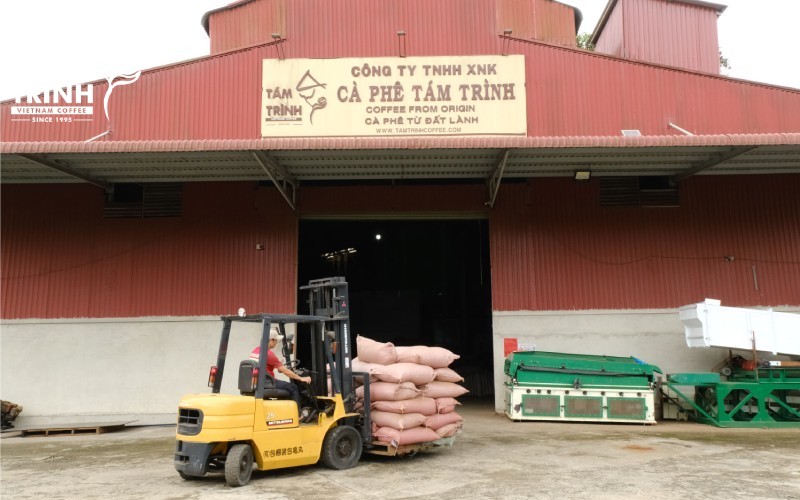
Tám Trình Coffee: A Robusta Coffee Supplier from Lam Dong
Tam Trinh Coffee is a Robusta coffee supplier based in Lam Dong, operating under a Farm-to-Export model that controls the entire supply chain from coffee farms to processing and export.
The company partners with more than 3,000 farming households, develops approximately 3,000 hectares of coffee-growing areas, and has an annual processing capacity of approximately 25,000 metric tons of coffee. The production process is controlled from harvesting ripe cherries through processing, grading, and packaging to ensure consistent quality across every shipment.
Tám Trình Coffee’s Robusta product portfolio includes:
- Commercial Robusta Green Coffee Beans
- Fine Robusta
- Robusta Honey
- Robusta Washed
- Robusta Natural
- Robusta Wet Polished
- Robusta Grade 1 and Grade 2
- Roasted Coffee Beans
- OEM and Private Label
With its diverse raw material supply, Tám Trình Coffee currently serves coffee roasters, importers, traders, coffee brands, and B2B businesses across numerous international markets.
Conclusion
Vietnam is the world’s largest Robusta-producing country, with each growing region offering its own distinctive cultivation conditions, production scale, and cup profile. Dak Lak leads in production volume and supply stability for the export market. Lam Dong—with nearly 119,000 hectares certified under 4C, Rainforest Alliance, and UTZ, and coffee export revenue reaching nearly USD 680 million in 2025 (Source: Lam Dong Department of Agriculture and Environment)—is an ideal sourcing region for premium Washed and Honey Robusta. Gia Lai, Dak Nong, and Kon Tum further diversify Vietnam’s commercial Robusta supply.
For coffee roasters, importers, and coffee businesses, understanding the characteristics of each growing region provides the foundation for developing blending formulas, selecting the right supply sources, and creating higher-value coffee products. Tám Trình Coffee, with its coffee-growing region in Lam Ha, Lam Dong, supplies Robusta Washed, Honey, and Natural coffees with full lot-level traceability, meeting the technical requirements of the European, Japanese, and South Korean markets. Contact the export team to request samples and receive the latest FOB quotation.
FAQ : Robusta coffee
Where is Robusta coffee mainly grown in Vietnam?
Vietnamese Robusta coffee is primarily cultivated in the Central Highlands, especially in Dak Lak, Lam Dong, Gia Lai, Dak Nong, and Kon Tum.
Which region is considered the capital of Vietnamese Robusta coffee?
Dak Lak is regarded as the capital of Vietnamese Robusta coffee thanks to its cultivation area of more than 210,000 hectares, the largest production volume in the country, and its long-established coffee-growing tradition.
What makes Lam Dong Robusta special?
Lam Dong Robusta benefits from favorable natural conditions for developing Fine Robusta through Honey, Washed, and Natural processing methods. The beans typically exhibit excellent sweetness, a clean finish, and are well suited for the premium coffee segment.
Does the growing region affect the flavor of Robusta?
Yes. Elevation, basalt soil, climate, rainfall, and cultivation techniques directly influence bean structure, body, sweetness, and flavor profile. However, the final quality also depends greatly on harvesting, processing, drying, and storage practices.
Which products is Vietnamese Robusta suitable for?
Vietnamese Robusta is widely used across multiple production segments. Instant coffee and coffee extract are its primary applications due to Robusta’s high caffeine content and excellent extraction yield. It is also widely used for commercial espresso blends requiring full body and stable crema, traditional Vietnamese phin coffee, commercial roasted coffee (OEM/private label), and full-lot green coffee exports for international roasters wishing to control their own roasting process.
Does Tám Trình Coffee supply Robusta coffee?
Yes. Tám Trình Coffee supplies green Robusta beans, Fine Robusta, Robusta Honey, Robusta Washed, Robusta Natural, and a wide range of commercial Robusta products for coffee roasters, importers, coffee brands, and B2B customers.





I never really thought about how much the growing region shapes a cup of Robusta until I read this breakdown of Vietnam’s coffee areas. It’s fascinating that Dak Lak and Lam Dong can produce such different flavor profiles, even though they’re both in the Central Highlands. The way elevation and soil change the beans makes me want to try them side by side. For anyone who loves exploring coffee origins, this article is a great starting point. And if you’re like me and enjoy visual learning, you might find Manga Translator handy for translating any illustrated coffee guides you come across.
I never realized how much the terroir of Vietnam’s Central Highlands could change a Robusta bean until I read about the distinct profiles from Dak Lak versus Lam Dong. It’s fascinating that elevation and soil can make such a difference in a cup that’s often just labeled ‘Vietnamese coffee.’ This article makes me want to brew a few single-origin Robustas side by side to taste those nutty, chocolatey notes for myself. If you’re like me and enjoy tinkering with flavors, you might also appreciate a little puzzle-solving break—this online cube puzzle solver is a fun way to unwind between tastings. I’ll definitely be more curious about the region on my next bag of beans.
I never realized how much the terroir of Vietnam’s Central Highlands could shape a cup of Robusta until I read this breakdown of Dak Lak and Lam Dong. It’s fascinating that elevation and soil create such distinct flavor profiles, from earthy and bold to brighter and more complex. This article makes me want to explore single-origin Vietnamese Robusta side by side to taste those regional differences myself. If you’re like me and love pairing a good story with your coffee, you might also enjoy creating a custom soundtrack to sip by— Musefy can generate a mellow ambient track that matches the mood of your tasting session. It’s a fun way to make the experience even more memorable.
I really enjoyed reading about Vietnam’s Robusta regions—it’s fascinating how much terroir matters even for Robusta, not just Arabica. The way Dak Lak’s elevation and soil shape its bold, chocolatey profile versus the brighter notes from Lam Dong really makes me want to try them side by side. As someone who loves experimenting with coffee at home, I’ve started paying more attention to where my beans come from, and this article gave me a great starting point. It also reminded me that when I share photos of my brewing setup or coffee travels, I should be mindful of the hidden data in those images. That’s why I appreciate tools like AI Image Metadata Remover —they help keep my location and details private. Thanks for putting together such a clear guide to these regions!
I recently read an article about the famous Robusta coffee-growing regions in Vietnam, and it was fascinating! The detailed descriptions of Dak Lak, Lam Dong, and other areas really brought the unique characteristics of each region to life. It’s amazing how the natural conditions and processing methods contribute to the distinct flavors of Vietnamese Robusta. This article reminded me of how to fish wiki, which offers a similar depth of information but in a different context.
Famous Robusta Coffee Growing Regions in Vietnam offers a crisp insightful look at how climate soil and altitude shape bold earthy beans. The piece highlights key provinces such as Dak Lak Dak Nong Lam Dong Gia Lai and Binh Phuoc, explaining terroir harvest timing and processing that yield chocolatey nutty notes. Clear maps and flavor profiles pair with practical farming context, making this a valuable read for coffee fans and curious travelers alike.