

Vietnamese Robusta Coffee Exporter: What B2B Buyers Need to Evaluate Before Sourcing
Choosing a Vietnamese robusta coffee exporter isn’t just about who quotes the lowest FOB price. The real work is evaluating what’s behind that price — the grading transparency, processing consistency, certification coverage, and supply chain documentation that determine whether a sourcing relationship holds up over multiple shipments.
Vietnam is the world’s largest Robusta producer, supplying roughly 40% of global Robusta production. But that scale also means the gap between a well-run export operation and a poorly managed one is wide. This guide covers the technical and commercial criteria that matter most when you’re qualifying a Vietnamese Robusta supplier.
Why Vietnam Dominates Global Robusta Supply
Vietnam’s dominance in Robusta isn’t a recent trend — it’s structural. The country’s Central Highlands provinces of Đắk Lắk, Lâm Đồng, Đắk Nông, and Gia Lai sit at elevations between 500–900 metres, with basalt-rich soil and a distinct wet-dry season cycle that produces consistently dense, high-caffeine Robusta beans. Robusta accounts for nearly 95% of Vietnam’s total coffee output (USDA FAS, 2025).
The numbers back it up. Vietnam generated USD 8.92 billion in coffee export revenue in 2025 — its highest on record — with export volume reaching approximately 1.59 million tonnes, up 18.3% year-on-year (VietnamNet / MARD, 2026). The USDA FAS forecasts production at 30.8 million 60-kg bags for the 2025/26 marketing year, rising to 32.5 million bags in 2026/27. For procurement teams, that means Vietnam can absorb both spot purchases and multi-year supply contracts at volumes most other origins can’t.
Robusta Green Coffee Grading Standards (TCVN 4193:2014)
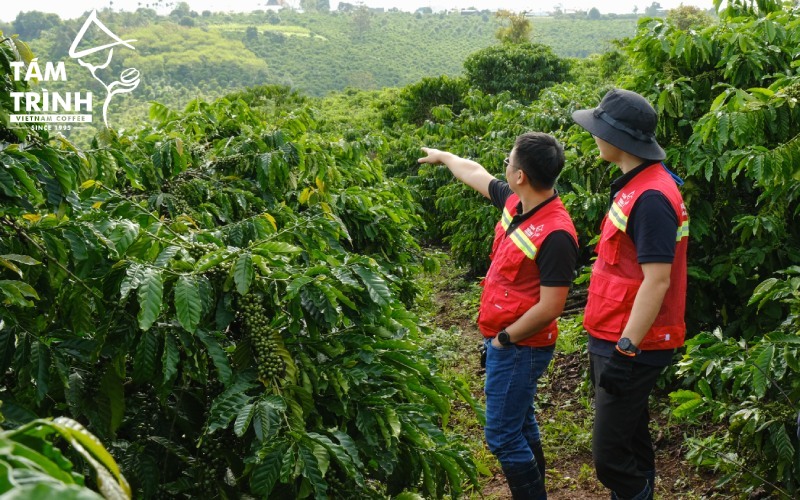
Vietnam grades green Robusta coffee under TCVN 4193:2014 — the national quality standard applied to all export lots. It evaluates beans across five measurable parameters: moisture content, screen size retention, foreign matter percentage, and total defect score. These aren’t guidelines — they’re the technical language your purchase contract should be written in.
Most commercial negotiations layer additional specifications on top of the TCVN baseline. If you’re sourcing for EU or US markets, you’ll typically tighten the moisture ceiling and require lower floater ratios. Here’s what Typical Vietnamese Green Robusta Export Specifications look like:
| Parameter | Export Standard | Premium / Tightened Spec | Why It Matters |
| Moisture | ≤ 12.5% | ≤ 12% (EU/US roasters) | Prevents mold and Ochratoxin A / Aflatoxin B1 formation |
| Screen Size | S16 and above | S18 and above (Grade 1) | Ensures uniform roasting and stable extraction yield |
| Floaters Ratio | < 3% (general) | < 1% (premium export) | Low-density beans damage roast consistency; removed via gravity sorting |
| Foreign Matter | 0.1% Max | 0.1% Max | Protects roasting equipment; removed via vibrating sieves and air separation |
Typical Vietnamese Green Robusta Export Specifications
When requesting samples or issuing purchase orders, buyers should specify both screen size and moisture ceiling explicitly — for example, “Screen 18 minimum, moisture ≤ 12%, floaters < 1%.” Exporters who cannot provide a Certificate of Analysis (COA) per shipment or operate without HACCP-aligned quality control should be treated with caution.
Source: tamtrinhcoffee.com/robusta-coffee/
Processing Methods and Their Impact on Your Application
Vietnamese Robusta is exported in three primary processing methods. Which one you need depends on your downstream application — espresso blends, instant coffee manufacturing, or specialty Robusta programs each call for something different.
Natural (Dry Process)
Whole cherries dry on raised beds before hulling. Natural-processed Vietnamese Robusta carries a heavier body and fruit-forward fermentation notes — useful for specialty Robusta applications and cold brew concentrates where you want more character. Expect a small FOB premium over equivalent-grade washed lots.
Honey Process
A middle-ground method: the cherry skin is removed, but varying levels of mucilage stay on the bean through drying. Cleaner than natural, more body than fully washed. Interest from specialty roasters building single-origin Robusta programs is growing, particularly for honey and anaerobic natural profiles out of Lâm Đồng.
Washed Process
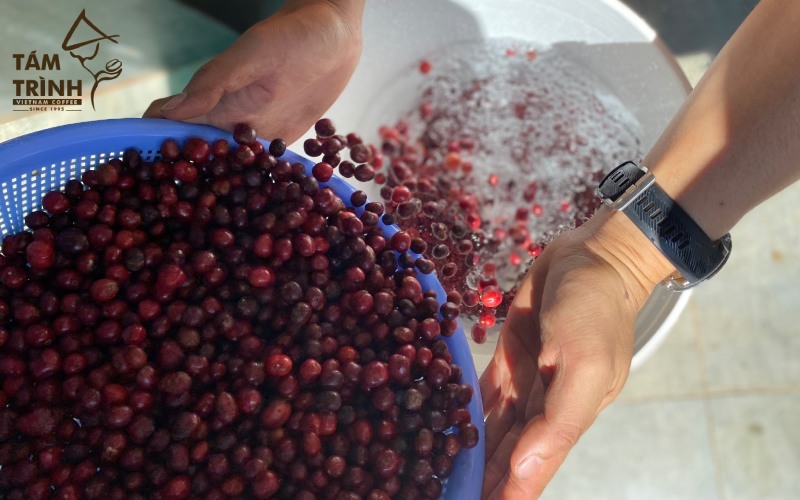
Washed processing is the most labor-intensive — and typically produces the cleanest, most consistent cup quality. That’s why it’s the default specification for premium commercial export lots. The process starts at harvest. Farmers pick only fully ripe cherries — unripe or overripe fruit compromises the final cup and raises defect counts. After harvest, cherries go through a depulping machine that strips the outer skin and pulp. The beans then soak in water to ferment, allowing natural enzymes to break down the remaining mucilage layer. After fermentation, the beans are washed thoroughly and dried — either under the sun on raised beds or by mechanical dryer — down to the required moisture level.
For buyers, washed Robusta means lower defect rates, tighter screen size consistency, and more predictable extraction yield across roast batches. If you’re sourcing for espresso base blends or commercial roasting at scale, specify Washed Process in your purchase contract.
Certifications Buyers Should Require from a Vietnamese Robusta Exporter
For buyers supplying regulated markets — especially the EU and US — an exporter’s certification profile is part of your supplier qualification process, not an afterthought. Here’s what to check before you issue a purchase order:
| Certification | What It Covers | Market Requirement |
| EUDR Compliance | Farm-level geotraceability; forest-free supply chain documentation | Mandatory for EU imports from Dec 30, 2026 |
| 4C (Common Code) | Baseline sustainability: environmental, social, and economic practices | EU and global commercial buyers |
| Rainforest Alliance | Environmental and social farm management; deforestation prevention | EU, US, Japan premium market access |
| Organic (USDA / EU) | No synthetic pesticides or fertilisers; documented chain of custody | US and EU organic retail/foodservice |
| ISO 22000 / HACCP | Food safety management at processing and export facility level | Required by most large-volume buyers |
Certifications required by Vietnamese Coffee Exporter
On EUDR specifically: Vietnam was classified as a “low-risk” country by the EU Commission, and MARD launched a national geotraceability database in December 2024 — built in partnership with IDH and JDE Peet’s — to help exporters document farm boundaries ahead of the December 30, 2026 enforcement date. Ask your exporter whether they’re enrolled in this system and whether they can provide due diligence documentation under Article 4 of EU Regulation 2023/1115. If the answer is vague, factor that into your risk assessment.
FOB Pricing, MOQ, and Lead Times: What to Expect in 2026
FOB prices for Vietnamese green Robusta depend on ICE London Robusta. Global benchmark price: Robusta futures contracts on ICE London serve as the price benchmark for Robusta coffee worldwide. Rising futures prices will push up export and domestic prices, and vice versa.
Supply and Demand Factors: Futures prices reflect market expectations regarding supply. Forecasts of a large crop yield in Vietnam (the largest Robusta producer) often put downward pressure on prices, while concerns about weather (such as El Niño) can push prices higher.
Certified inventories: The amount of certified Robusta coffee in inventory on the ICE exchange is “tangible inventory” and is an important indicator. When this inventory increases, it usually reflects abundant supply and puts downward pressure on prices. Conversely, low inventory can push prices up.
And the FOB price is usually made up of:
Production and Packaging Costs: The cost of producing goods, including raw materials, labor, and export packaging costs to ensure safety during domestic transportation and handling.
Domestic Transportation: The cost of transporting goods from the seller’s warehouse to the export port.
Export Customs Clearance Costs: Fees and charges for paperwork, permits, and export customs clearance procedures.
Don’t rely on fixed price lists — request a current quotation based on current price and Incoterms. Most exporters quote FOB Ho Chi Minh City (Cát Lái).
For context on where the market sits: London Robusta futures peaked at USD 5,821/tonne in February 2025 — a multi-decade high. Since then, prices have eased significantly. By Q1 2026, Vietnam’s average coffee export price had dropped to USD 4,696.8/tonne, down 16.9% from the 2025 peak, as supply recovered from both Vietnam and Brazil Buyers entering contracts in mid-2026 are in a more favorable position than they were twelve months ago.
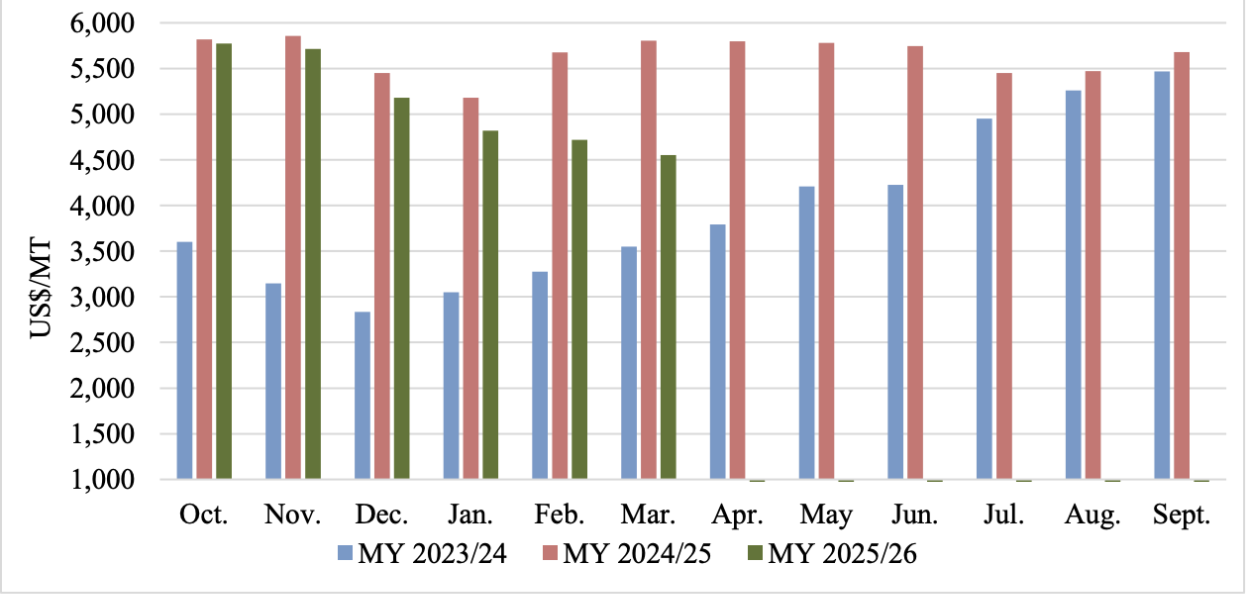
(source:Vietnam Customs, Trade contacts)
MOQ (Minimum Order Quantity) 10 – to 19.2 metric tonnes, approximately 19.2 metric tonnes is one 20-foot container (320bags × 60 kg in jute or GrainPro liner bags). For the order, expect 2-4 weeks from contract confirmation to vessel loading. Certified or custom-processed lots – organic, anaerobic, specific honey profiles – require additional lead time. Confirm all specifications in writing before executing the contract.
Frequently Asked Questions
Q1. How does Vietnamese robusta compare to Ugandan or Ivory Coast robusta for instant coffee manufacturing?
Vietnamese Robusta offers higher caffeine content (typically 2.7–3.5% vs. 2.0–2.5% in West African origins) and a more neutral, low-acid cup profile — making it the preferred base for spray-dried and freeze-dried instant coffee production. Vietnam’s large volume capacity and competitive FOB pricing further support it as the primary sourcing origin for industrial-scale manufacturers.
Q2. Is Vietnamese robusta coffee compliant with EU Maximum Residue Limits (MRL)?
Reputable Vietnamese exporters maintain MRL compliance through controlled use of agrochemicals and pre-shipment testing. Buyers sourcing for EU markets should request a pesticide residue analysis report per shipment and confirm that the exporter operates under a documented crop protection protocol aligned with EU Regulation 396/2005.
Q3. Can I source both washed and natural processed robusta from the same exporter?
Yes. Most established Vietnamese green coffee exporter offer multiple processing methods. — including washed, Natural, and Honey process — allowing buyers to consolidate sourcing and reduce logistics complexity while still diversifying cup profile options across their product range.
Q4. What documents are required for green coffee import clearance in the European Union?
Standard documentation for EU import clearance includes: a phytosanitary certificate issued by Vietnam’s Plant Protection Department, certificate of origin (Form B or EUR.1), bill of lading, commercial invoice, packing list, and — from December 2026 — EUDR due diligence documentation per Article 4 of EU Regulation 2023/1115.
Q5. What is the minimum order quantity (MOQ) for Vietnamese robusta coffee?
The standard MOQ for green Robusta export lots is one 20-foot container, equivalent to approximately 18–19 metric tonnes of green beans packed in GrainPro or jute bags. Smaller trial quantities may be available for first-time buyers subject to prior arrangement — contact our export team to discuss your specific volume requirements.
Conclusion
Vietnam’s Robusta sector gives international buyers something rare: scale, grade diversity, and a compliance infrastructure that’s actively improving. A reliable Vietnamese robusta coffee exporter should be able to show you grading documentation, processing options, certification coverage, and EUDR traceability — not just a price per tonne. Tám Trình Coffee, based in Lâm Hà, Lâm Đồng, supplies export-grade green Robusta with TCVN 4193:2014-compliant lots, flexible MOQ, and full traceability documentation for roasters and manufacturers worldwide.
→ Request a quote from Tám Trình Coffee’s export team
Specify your target grade (S16/S18), processing preference, certification requirements, and volume. We’ll respond with a full product spec sheet and current FOB pricing within 2 business days.
→ Contact us for sample availability