


Types of Green Coffee Beans in the Vietnamese Market: Classification and Export Quality Standards
Green coffee beans are coffee beans that have been processed and hulled but have not yet been roasted. Today, Vietnam is proud to be one of the world’s leading exporters of green coffee beans, especially Robusta. To gain a more complete understanding of this important raw material, refer to the following insights from Tam Trinh Coffee.
Types of Green Coffee Beans in the Vietnamese Market
Vietnam is known as a country with climate and soil conditions that are highly suitable for developing different types of green coffee beans. Among them, the two most common types are:
Robusta Green Coffee Beans
Robusta green coffee beans are currently a strategic export product, accounting for more than 90% of Vietnam’s total coffee export volume. They are cultivated and developed in key growing regions with ideal soil conditions. In general, the basic attributes of this coffee line are clearly shaped by two main commercial segments:
Commercial Grade Segment:
Represented by Robusta Grade 1 and Grade 2, with Screen 13, 16, and 18 sizes and strictly controlled black and broken bean rates ranging from under 1% to 5%. Processed using traditional dry processing or polished methods, this is considered the most cost-effective solution. These beans serve as a core raw material for instant coffee factories and also provide the perfect base for creating a thick, smooth crema in espresso blends.
Premium Grade Segment:
This segment targets the third wave of specialty coffee, with typical representatives such as Fine Robusta and Robusta processed using Honey or Washed methods. This segment requires strict control, from fully ripe hand-picking to advanced fermentation management. As a result, the final product can achieve cupping scores of 80 points or higher according to the strict standards of the Coffee Quality Institute (CQI).
Arabica Green Coffee Beans
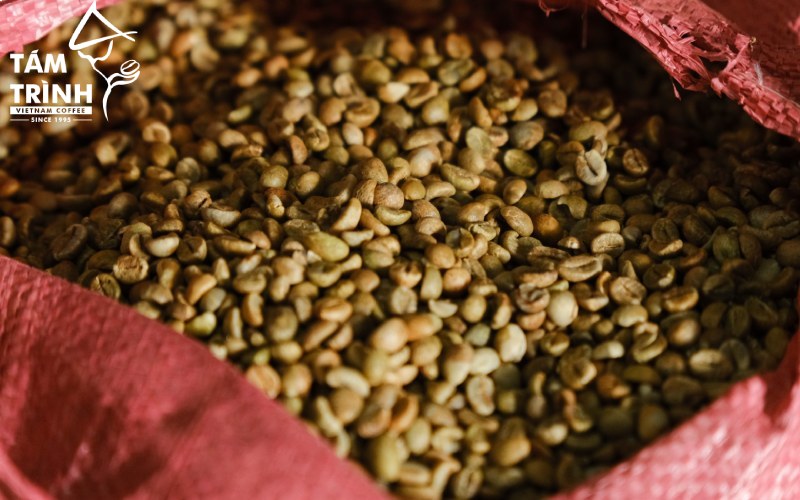
Arabica green coffee beans account for less than 10% of Vietnam’s coffee production but bring high economic value to the country. This product line is concentrated in key growing regions with ideal elevations, such as Lam Dong and Quang Tri, and is divided into two segments:
Commercial Grade Segment:
This includes traditional wet-processed Arabica Grade 1 and Grade 2. It is a cost-effective solution and serves as a main raw material for commercial roasters, helping create deeper aroma and bright acidity in coffee blends.
Premium & Specialty Grade Segment:
This includes specialty Arabica harvested from 100% ripe cherries and processed with advanced methods. The product achieves cupping scores above 80 points according to CQI/SCA standards and serves the third wave specialty coffee market with fruity flavors and a deep sweet aftertaste.
Export Green Coffee Bean Classification Standards
In international B2B trade, green coffee bean classification is not based on subjective judgment but strictly follows technical indicators. These standards are the foundation for importers to evaluate coffee bean quality, price contracts, and optimize industrial roasting profiles or blends.
Classification by Species
Green coffee beans are currently divided into two common species: Robusta and Arabica. In addition, the market also includes several hybrid varieties or specialty coffee lines designed for the specific needs of roasting factories.

Classification by Processing Method
The processing method directly affects the flavor of coffee after roasting. Common processing methods include:
Natural Process:
With this method, coffee cherries are dried whole before hulling. This processing method gives coffee beans higher sweetness and more noticeable fruity notes. The Natural Process mainly serves the industrial segment.
Washed Process:
This method removes the fruit pulp before fermentation and drying. The process helps green coffee beans achieve more uniform color, completely removes common fruit-skin defects such as earthy or musty notes, and creates a clean cup that meets the strict quarantine standards of Japan and the EU. The Washed Process is a required standard for the industrial segment and a foundation for the premium segment.
Honey Process:
This method retains a large portion of the coffee cherry mucilage during drying. As a result, the coffee develops a more balanced taste and more complex flavor. This method is specifically used for the premium and specialty segments.
Classification by Size: Screen Size
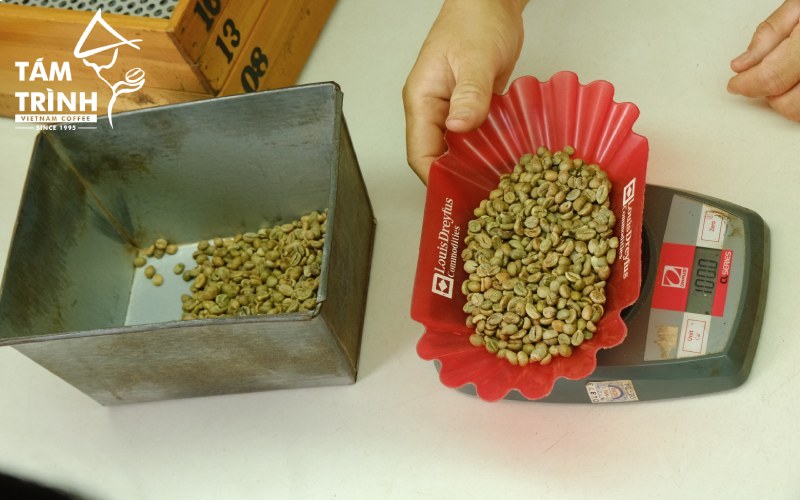
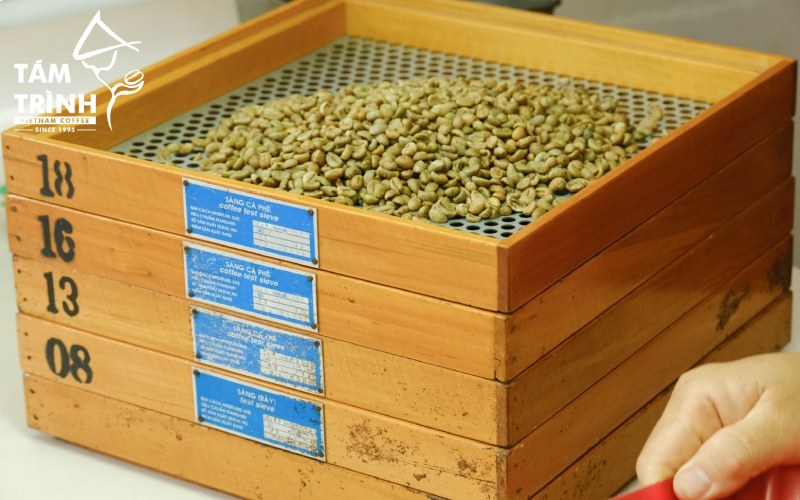
This is the most important physical classification standard in trade because it ensures temperature uniformity during roasting. Vietnamese green coffee beans are graded using the international standard round-hole screen system, measured in 1/64 inch:
Screen 18 — 7.1 mm
- Segment: Premium, Specialty Coffee, Fine Robusta.
- Application: Used as raw material for single-origin roasted coffee, premium espresso blends, or high-end Vietnamese phin coffee. Large beans accumulate sugar well and preserve flavor more completely.
- Markets: Exported to demanding markets such as Europe, the United States, Japan, South Korea, and major domestic coffee chains.
- Target Customers: Specialty roasters, third-wave coffee shops, and customers that require highly uniform bean appearance.
Screen 16 — 6.3 mm
- Segment: Mainstream commercial to near-premium. This is the most widely traded screen size.
- Application: Used as a core material for mass-market roasted coffee and commercial blends, offering a good balance between quality and cost.
- Markets: Large-volume exports to Asia, the Middle East, part of Europe, and strong domestic consumption.
- Target Customers: Medium and large roasting factories, mainstream coffee chains, and suppliers of mid-range phin and machine-brewed coffee.
Screen 13 — 5.0 mm
- Segment: Industrial or value-grade coffee.
- Application: Used as raw material for instant coffee production, flavor extraction, or value-blend products to optimize cost.
- Markets: Countries with strong instant coffee consumption or those importing raw coffee for deep processing, such as China, Eastern Europe, and South Asia.
- Target Customers: Food and beverage corporations and industrial instant coffee processing factories.
Green Coffee Bean Processing Workflow for Export Requirements
To ensure consistent quality for international markets, green coffee beans must go through a strict processing and control workflow from the growing region to packaging.
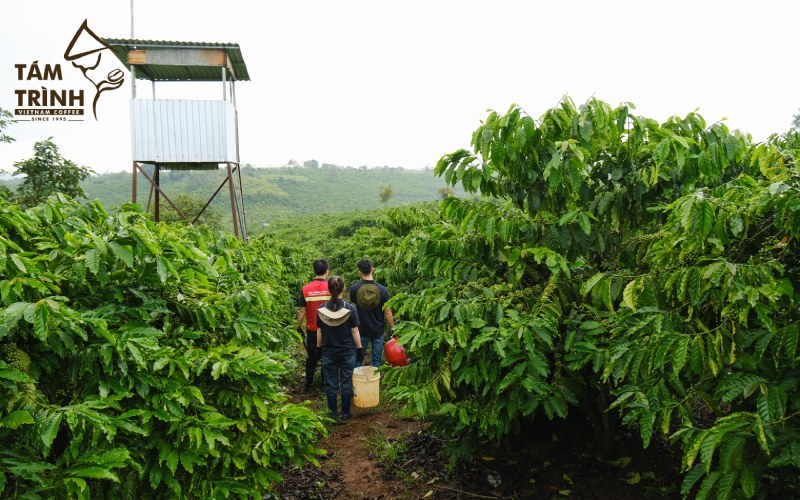
- Harvest and Purchasing Control:
Strict control from farming households to remove immature, withered, or moldy coffee cherries. The ripe-cherry rate should reach over 85% for commercial grade or over 95% for premium grade. Fresh material moisture should be below 16%–18%. - Processing and Drying:
Coffee is processed using Natural, Washed, or Honey methods, then dried to reduce moisture to a safe level of 12.5%, helping prevent mold growth. Drying temperature must remain below 40°C–45°C to protect the embryo. - Primary Impurity Screening:
Vibrating screens and separating machines are used to remove soil, sand, and foreign matter, protecting machinery in later stages. The impurity rate after screening must be below 0.1%. - Dry Hulling:
Roller or disc hullers are used to remove parchment or silver skin, releasing the green coffee beans and polishing the surface. The remaining parchment rate must be below 0.5%, and the broken bean rate should be below 1%. - Size Grading:
Beans pass through standard round-hole screen layers such as Screen 18, 16, and 13 to ensure high uniformity and even roasting. Each lot must have 90%–95% of beans within the required screen size. - Density Sorting:
Gravity tables combined with airflow are used to remove light, hollow, or insect-damaged beans. The bulk density of the whole lot should reach 650–720 g/liter. - Laser Color Sorting:
High-speed cameras and laser technology are used to remove defective beans such as black, mottled brown, or moldy beans. After color sorting, black and broken bean rates must be below 0.1% for premium grade or below 1% for Grade 1. - Bagging and Warehousing:
Coffee is packed in 60 kg jute bags, or lined with GrainPro bags for premium products, and stacked on pallets to prevent reverse moisture absorption. Warehouses must maintain humidity below 65% and temperature below 30°C.
Export Quality Standards for Green Coffee Beans
To export green coffee beans, products must meet the following quality standards:
Origin:
The origin must not only indicate the country. Suppliers must also be able to provide precise geolocation data for each farming plot. This is a prerequisite for complying with the European Union Deforestation Regulation (EUDR), proving that the coffee was not cultivated on deforested land after December 31, 2020.
Species:
Robusta and Arabica must be clearly identified through phytosanitary certificates and customs declarations. The mixing rate between the two species within the same commercial lot must be 0%.
Processing Method:
The technical file of each lot must clearly state the post-harvest processing method: Natural, Washed, or Honey. This factor determines the uniformity of physical bean color and appearance.
Screen Size:
Physical measurement is conducted through the international standard round-hole screen system. For export orders, the percentage of beans retained on the specified screen, such as Screen 16 or Screen 18, must be at least above 90%, while undersized beans must not exceed 5%.
Moisture Content:
Moisture is a critical standard for preventing mold and preserving flavor during sea freight. Export-standard moisture must remain within the range of 12%–12.5%.
Defect Rate:
Defects are classified and scored according to ISO or SCA/CQI standards. For premium commercial Grade 1 coffee, black and broken beans and impurity defects must be controlled at ≤1%; for Grade 2, ≤5%. For specialty coffee, primary defects must be 0.
Foreign Matter:
Strict limits apply to non-coffee foreign matter. Total foreign matter must not exceed ≤0.1% of the net weight in each export bag.
Crop Year:
The specific crop year must be stated on documents, for example, 2025–2026. Standard export coffee must come from the new harvest. Old inventory must not be mixed in order to maintain consistency in flavor and green bean color.
Packing:
Packaging must follow international sea freight standards, using natural jute bags with a net weight of 60.0 kg per bag. For premium products, an inner multilayer polymer liner is required to protect and seal in flavor.
Cup Profile:
Sensory evaluation is based on the SCA/CQI cupping process. Standard commercial coffee must be free from defective odors or flavors. For Fine Robusta or specialty Arabica, the cupping score must reach 80 points or higher on a 100-point scale.
Green Coffee Export Warehousing Process at Tam Trinh Factory
In the Farm-to-Export supply chain, green coffee warehousing is a critical factor in maintaining consistency and preventing the physical and chemical degradation of beans before export shipment. At Tam Trinh Coffee’s factory, the central warehouse system is strictly operated according to international standards:
Temperature and Humidity Control:
Air humidity is maintained at ≤65% to prevent beans from absorbing moisture again, which can cause mold and ochratoxin A contamination. Warehouse temperature is kept below 25°C–30°C to prevent “sweating,” which can reduce cupping scores.
Pallet Stacking Standards:
All goods must be placed on pallets, at least 50 cm away from walls and at least 20 cm above the floor to optimize air circulation. Stack height is limited to 10–12 bag layers using an interlocking structure to prevent compression that could break beans in the bottom layers.
Preservation Packaging Technology:
Commercial-grade coffee uses naturally breathable jute bags. Premium and specialty coffee uses sealed packaging technology with multilayer inner liners inside jute bags, creating a modified air environment that isolates oxygen, prevents insect damage, and preserves the original flavor for one to two years.
Odor Isolation and Cross-Contamination Control:
Coffee is stored in a dedicated warehouse with complete isolation from chemicals, fuel, or strongly scented agricultural products to protect the flavor profile. Loading and unloading systems are standardized with electric forklifts instead of diesel or gas forklifts to prevent exhaust odor contamination.
Periodic QC Monitoring:
The QC team conducts weekly inspections using specialized moisture meters to keep bean moisture within the ideal range of 12%–12.5%, combined with sensory inspection to detect insect risks. The inbound and outbound process strictly follows the FIFO principle, or First In, First Out, based on lot identification codes to keep green coffee beans fresh.
Tam Trinh Coffee: Green Coffee Processing and Export Factory in Lam Dong
Operating under a sustainable closed-loop model, Tam Trinh Coffee is a trusted deep-processing factory and direct exporter of green coffee beans in Lam Dong. We supply two strategic product lines: commercial Robusta and premium-segment Fine Robusta/Arabica that meet the strict standards of international markets.
With modern technology infrastructure, Tam Trinh Coffee offers flexible processing capabilities across multiple methods, including Washed, Natural, and advanced Honey Process. This helps optimize roasting profiles and flavor structure according to the specific requirements of global roasters.
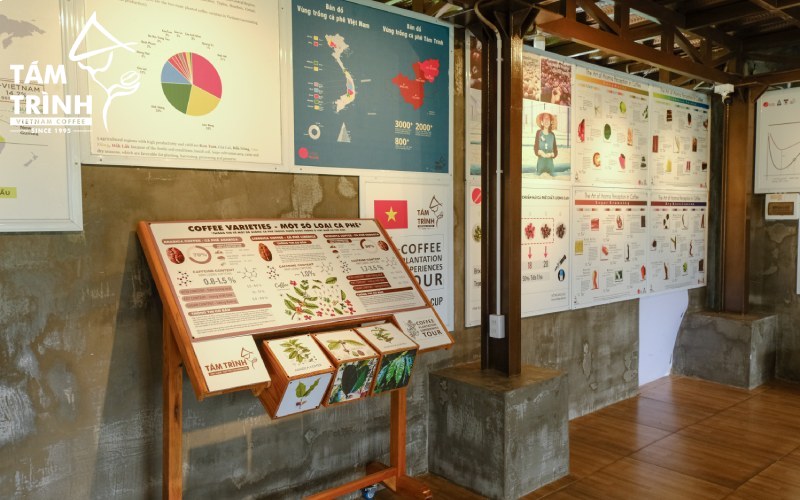
Tam Trinh Coffee has built strong strategic partnerships with more than 3,000 local farming households in the Central Highlands. This large-scale partnership not only guarantees stable supply and strict control of ripe-cherry harvesting at the source, but also serves as the foundation for digitizing geolocation data systems to comply with the European Union Deforestation Regulation (EUDR).
This proactive approach to legal compliance and supply-chain risk management has made Tam Trinh Coffee a long-term strategic partner for domestic and international roasting groups, reaching importers and traders in more than 20 countries worldwide on their journey to find sustainable, high-quality green coffee sources from Vietnam.
Conclusion
Choosing the right supply source, standards, and processing workflow helps ensure coffee flavor and increase export value. If customers are looking for a reliable green coffee bean supplier, Tam Trinh Coffee is ready to support them. The company is prepared to accompany businesses in the international market.
FAQ: Green Coffee Beans
What are green coffee beans?
Green coffee beans are coffee beans that have been processed, dried, hulled, and graded but have not been roasted. They are the main raw material for roasting, processing, and export.
Are green coffee beans the same as raw coffee?
Yes. Green coffee beans are also called raw coffee beans because they have not undergone the roasting process.
What are green coffee beans used for?
Green coffee beans are used for roasting, instant coffee production, espresso blending, specialty coffee, OEM/private label products, and commercial export.
What is the difference between Robusta and Arabica green coffee beans?
Robusta green coffee beans usually have a bolder flavor, higher caffeine content, and fuller body, making them suitable for instant coffee or commercial roasting. Arabica green coffee beans are usually more aromatic, have clearer acidity, and are suitable for specialty coffee or premium blends.
What standards should be checked for export green coffee beans?
Important standards include origin, species, processing method, screen size, moisture content, defect rate, foreign matter, crop year, packing, and cup profile.
What moisture level is suitable for green coffee beans?
Moisture content should be controlled according to customer requirements and export standards such as TCVN 4193:2014, EUDR, MRL, and SCA standards. The goal is to keep the beans stable during storage and transportation while reducing the risk of mold or quality loss.
Does Tam Trinh Coffee supply green coffee beans?
Yes. Tam Trinh Coffee is a coffee processing factory in Lam Dong, specializing in supplying and exporting Robusta and Arabica green coffee beans.