


Proper Coffee Storage: Expert Tips to Preserve Freshness and Flavor
Coffee is not just a beverage—it is a highly sensitive agricultural product. Once it leaves the roasting machine, the flavor degradation process begins immediately. With more than three decades of experience handling coffee exports, Tám Trình Coffee understands that while brewing is a skill, knowing how to store coffee properly is a true appreciation of its original value. This article will help you prevent the silent factors that destroy your coffee’s flavor through professional methods of storing both coffee beans and ground coffee.
The 4 Biggest Enemies of Coffee Storage You Must Avoid
To store coffee effectively, you first need to recognize the factors that negatively affect it. Think of coffee as a fresh product that must be carefully protected from these four enemies:
Air (Oxidation Process)
This is the number one enemy.
Just like a sliced apple turns brown when exposed to air, coffee oxidizes when it comes into contact with oxygen (O₂). This process evaporates volatile aromatic oils—the compounds responsible for coffee’s appealing aroma—and causes fats inside the coffee to become rancid. As a result, the coffee loses its sweetness and original fruity notes.

Humidity
Pure roasted coffee has a porous structure, making it highly absorbent to moisture.
Humid environments not only dissolve and wash away extractable compounds but also create ideal conditions for mold and bacteria growth, directly affecting consumer health.
High Temperature
Heat accelerates chemical reactions inside the beans, forcing natural oils to rise to the surface more quickly.
Once exposed to oxygen, these oils rapidly become rancid, creating unpleasant oily and stale aromas.
Direct Light (UV Rays)
Ultraviolet rays from sunlight can break down the molecular structure of flavor compounds inside coffee beans.
That is why reputable coffee brands never package coffee in transparent plastic bags or clear glass jars.
How to Store Whole Coffee Beans Properly
Using whole coffee beans and grinding them only when needed is the best way to achieve a perfect espresso or Vietnamese phin coffee.
Apply the following storage rules:
Use Zip Bags with One-Way Valves
Freshly roasted coffee beans continuously release CO₂ gas during the degassing process.
The one-way valve on professional coffee bags allows CO₂ to escape while preventing oxygen from entering the package.
If your coffee comes in a zip bag with this valve, keep it in the original packaging. Press out excess air and tightly seal the zip after each use.
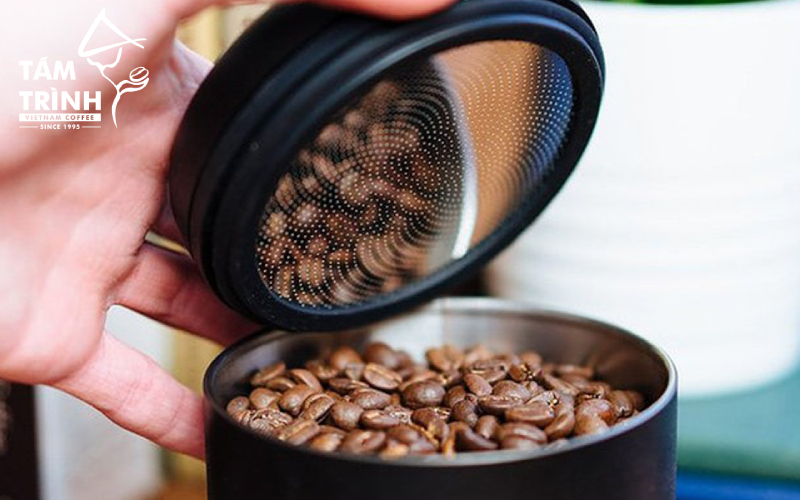
Store in Airtight Dark Containers
If you prefer transferring coffee to another container, use:
- Dark glass jars
- Tin containers
- Ceramic jars
- Stainless steel containers with airtight rubber seals
Avoid clear glass jars exposed to light.
Keep Coffee in a Cool, Dry Place
The ideal storage location is a dry kitchen cabinet with stable temperatures around 20–25°C.
Avoid storing coffee near:
- Gas stoves or ovens (heat)
- Kitchen sinks (humidity)
How to Store Ground Coffee for Maximum Freshness
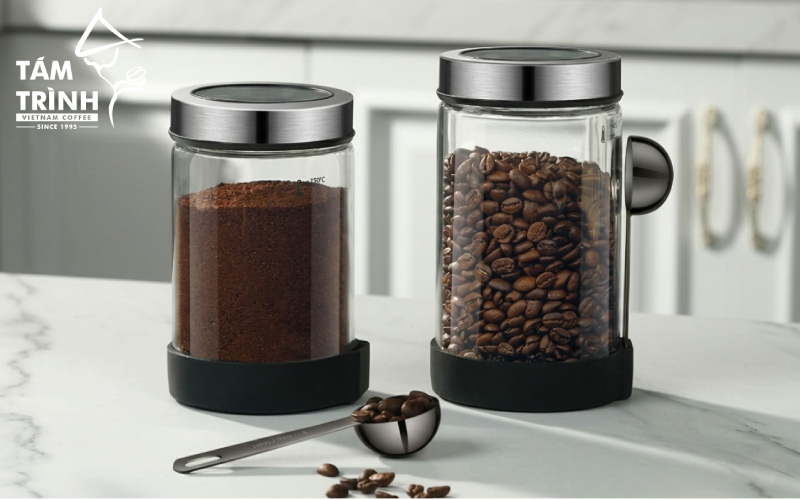
Ground coffee deteriorates extremely quickly.
When beans are ground, the surface area exposed to oxygen increases dramatically. Aromatic compounds that would normally take weeks to disappear in whole beans may vanish within hours in ground coffee.
If you must use pre-ground coffee, follow these tips:
- Buy only enough for 1–2 weeks
- Open the package briefly and reseal immediately
- Use a dry spoon when scooping coffee
- Divide large packages into smaller airtight containers
Should Coffee Be Stored in the Refrigerator?
This is one of the most debated topics among coffee lovers.
Based on decades of production experience, Tam Trinh Coffee offers the following perspective:
Risk of Odor Absorption
Coffee is an extremely powerful odor absorber.
If not vacuum-sealed properly, it will absorb odors from garlic, onions, and food stored in the refrigerator, completely altering its flavor profile.
Condensation Risk
Taking coffee in and out of the refrigerator creates sudden temperature changes, causing condensation inside the packaging.
This moisture can damage coffee even faster than room-temperature storage.
When Is Freezing Acceptable?
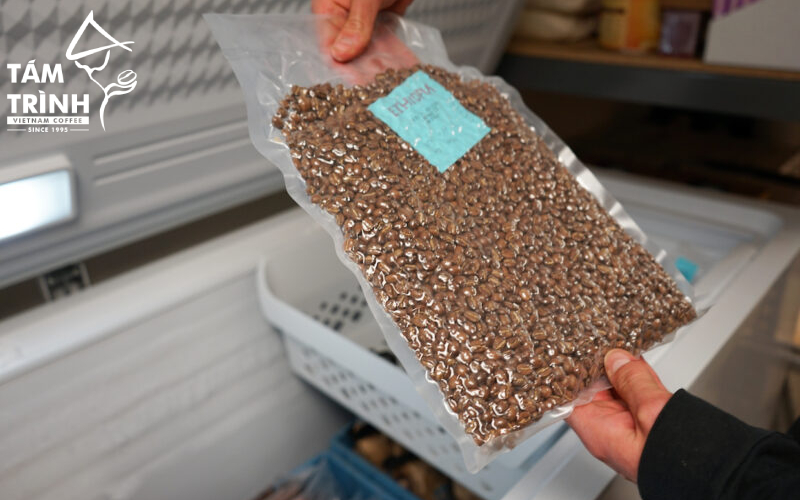
Freezing is only suitable for long-term storage (over one month) under these conditions:
- Coffee must be vacuum sealed
- Divided into single-use portions
- Never refrozen after thawing
Tips to Keep Coffee Fresh Longer
Beyond using proper containers, daily habits also determine coffee quality.
Buy Smaller Quantities
Instead of purchasing large bags for discounts, buy enough coffee for 1–2 weeks to maintain freshness.
Check the Roast Date
Coffee tastes best after resting for 7–14 days post-roasting, allowing proper degassing.
Ideally, coffee should be consumed within 6 weeks from the roast date.
Choose Professional Packaging
Prioritize coffee packaged in aluminum-lined bags with one-way degassing valves.
Conclusion
Proper coffee storage is the final yet extremely important step in the “Farm to Cup” journey.
Careful storage not only protects your investment but also respects the craftsmanship of farmers and roasters who dedicate themselves to creating exceptional coffee.
Looking for freshly roasted pure coffee produced directly from the farm? Visit Tám Trình Coffee and discover freshly roasted coffee that captures the true essence of Vietnam’s highlands.
FAQ: Coffee Storage
How long does coffee stay fresh after opening?
For the best flavor experience:
- Ground coffee: consume within 2 weeks
- Whole beans: consume within 4 weeks after opening
Why do coffee bags have a small valve?
That is a one-way valve that releases naturally produced CO₂ after roasting while preventing oxygen from entering and causing oxidation.
Are plastic containers good for storing coffee?
You may use high-quality BPA-free food-grade plastic containers, but dark glass, ceramic, or stainless steel containers remain the best options to prevent unwanted odors from affecting coffee flavor.