


Technical Analysis of the Professional Coffee Roasting Process
Coffee roasting is the most critical transformation stage determining the sensory quality of the final product. Controlling heat energy and roasting time inside the roasting machine requires a deep understanding of the physical and chemical characteristics of green coffee beans in order to optimize the unique flavor profile of each growing region. At Tám Trình Coffee, with more than 30 years of experience, we consider every roast batch a rigorous combination of thermodynamic science and the art of sensory perception.
What Is Coffee Roasting? Chemical Transformations and Flavor Development
In the journey from farm to cup, coffee roasting is considered the “final push” that awakens the hidden flavors inside green coffee beans. To create a quality cup of coffee, roasting plays a significant role:
- 40% – Variety, terroir, and cultivation
- 30% – Processing method
- 20% – Roasting technique
- 10% – Brewing technique
If cultivation and processing create potential, roasting determines up to 70% of the final flavor in the cup.
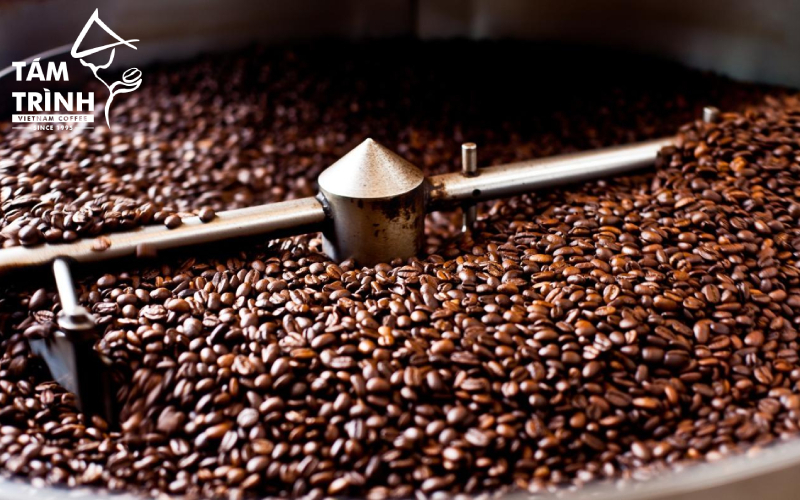
Coffee Roasting Process
Basically, roasting is the process of using heat energy to transform the physical and chemical properties of coffee beans. Two of the most important reactions occurring inside the roasting drum are:
Maillard Reaction
The Maillard reaction is a non-enzymatic browning reaction between amino acids and reducing sugars. It contributes to coffee’s brown color and develops flavor complexity by creating numerous aromatic compounds such as bread-like and nutty notes. Maillard reactions become self-sustaining above 160°C.
Caramelization Reaction
Caramelization is a form of thermal decomposition. It begins around 171°C, when roasting heat breaks down sugar molecules and creates hundreds of new compounds, including bitter, acidic, aromatic, and brown-colored molecules. This process deepens the brown color while developing fruity, caramel, and nutty flavors.
If heat is poorly controlled, all the farmer’s efforts become meaningless. That is why roasters are often described as “storytellers” through temperature.
Thermodynamic Stages in the Roasting Process
A standard roasting cycle in modern factories is divided into several stages based on temperature changes and structural reactions inside the beans.
Stage 1 – Heat Transfer and Drying Phase
At the beginning, coffee beans absorb heat energy from the roasting drum to evaporate internal moisture. The goal is to reduce bean moisture from around 12% to an optimal level before entering more complex chemical reactions.
If the drying phase is not managed properly (too much or too little heat), the beans may become “burnt outside but raw inside,” resulting in unpleasant grassy flavors.

Stage 2 – Maillard Reaction and Flavor Compound Formation
When temperatures reach approximately 150°C–160°C, sugars and amino acids interact to create melanoidins and flavor precursors.
Controlling the Rate of Rise (RoR) during this stage determines the coffee’s body and aftertaste. This is the most important phase for developing chocolate, nutty, and caramel notes.
Stage 3 – First Crack: The Critical Turning Point
At temperatures around 196°C–205°C, you will hear continuous popping sounds known as the first crack.
This happens because accumulated CO₂ pressure inside the beans escapes suddenly as the cellular structure breaks apart. The beans expand, become smoother, and change to a light brown color.
If roasting stops shortly after the first crack, the result is a light to medium-light roast with:
- Light body
- Higher acidity
- Preserved origin characteristics
- Floral and fruity notes
- Gentle caramel sweetness
If underdeveloped, the coffee may taste grassy or lemon-like.
Stage 4 – Flavor Development Time
After the first crack comes the flavor development stage, where the roaster’s expertise becomes most apparent.
The Development Time Ratio (DTR) is usually maintained at 20–25% for modern roasting profiles.
- DTR too low → sharp acidity and lack of sweetness
- DTR too high → burnt flavors, flat taste, and loss of aroma
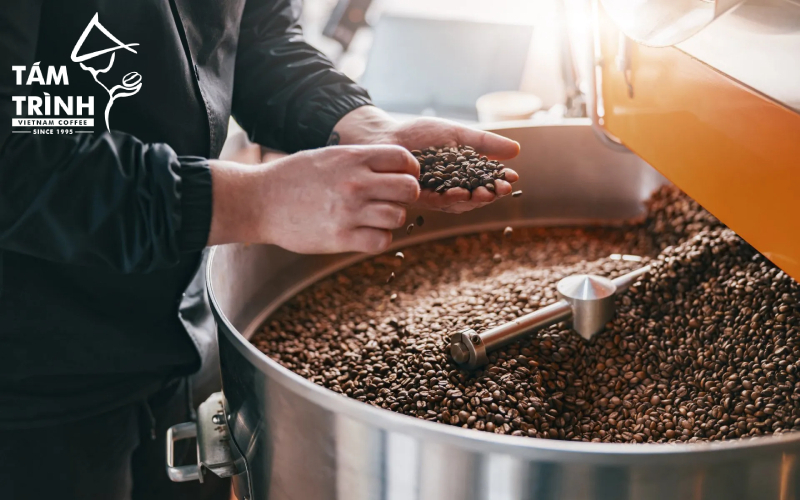
Stage 5 – Second Crack: Oils Emerging to the Surface
If heat continues increasing to around 224°C–230°C, the second crack occurs—louder and more intense than the first.
At this stage:
- The bean cell structure is almost completely broken down
- Oils begin appearing on the bean surface
- Beans become dark brown to shiny black
Flavor characteristics include:
- Strong bitterness
- Low acidity
- Heavy body
- Smoky aroma
This roast level is traditional for Italian espresso and classic Vietnamese coffee. However, roasting too dark removes most of the bean’s original characteristics, leaving only “roast flavor.”
Physical and Chemical Changes Affecting Coffee Quality
Heat causes irreversible structural changes that directly affect brewing extraction performance.
Changes in Weight and Volume
Due to bean expansion and gas release:
- Beans lose approximately 12%–24% of their weight
- Bean volume increases by 150%–190%
Changes in Acids and Sugars
Organic acids such as Chlorogenic Acid (CGA)—the most common acid in green coffee beans—gradually break down during roasting.
- Light roasts retain about 50% of CGA
- Dark roasts retain only around 20%
CGA decomposes into quinic and caffeic acids, contributing to coffee body and acidity.
In small amounts, these acids create pleasant brightness; in excess, they produce harsh sourness and astringency.
CO₂ Formation
CO₂ acts as a natural preservative inside the bean, but it must be released through degassing after roasting to prevent extraction issues during brewing.
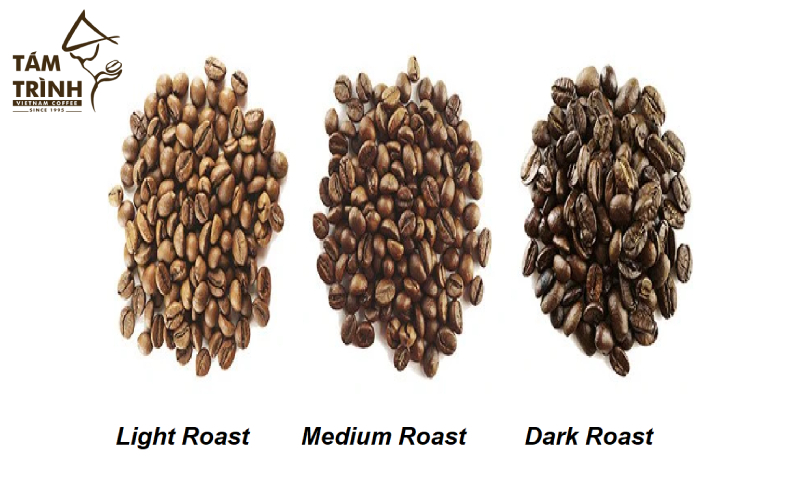
Roast Level Standards in Industrial Production
Depending on the intended brewing method (Espresso, Vietnamese phin, or Pour-over), coffee beans are stopped at different temperature thresholds.
Light Roast
Finished immediately after or during the first crack (195°C–205°C).
This roast preserves acidity and original floral and fruity characteristics, making it highly popular in specialty coffee.
Medium Roast
Finished before the second crack begins (210°C–215°C).
This roast achieves balance between natural acidity and caramel sweetness while creating a fuller body. It is the most common roast level for premium commercial coffee and modern Vietnamese phin coffee.
Dark Roast
Roasted above 225°C.
Sugars become carbonized, producing strong bitterness, smoky notes, and dark chocolate flavors. Oils appear on the bean surface.
This roast level is suitable for traditional strong coffee and milk-based coffee blends.
Factors Determining Roast Quality
Temperature and Rate of Rise (RoR)
RoR measures how quickly bean temperature increases over time.
A skilled roaster gradually lowers RoR smoothly to avoid thermal shock and ensure complete flavor development.
Total Roast Time and DTR
Total roast time influences sweetness and acidity.
DTR acts as a “maturity indicator” for flavor development. Accurate DTR control ensures consistent roast quality, which is essential in industrial production.
Common Roasting Defects and Solutions
Baked Coffee
Cause: RoR too low or stalled too long.
Characteristics:
- Pale color
- Stale bread aroma
- Flat flavor
Solution: Increase heat input and maintain stable heat progression.
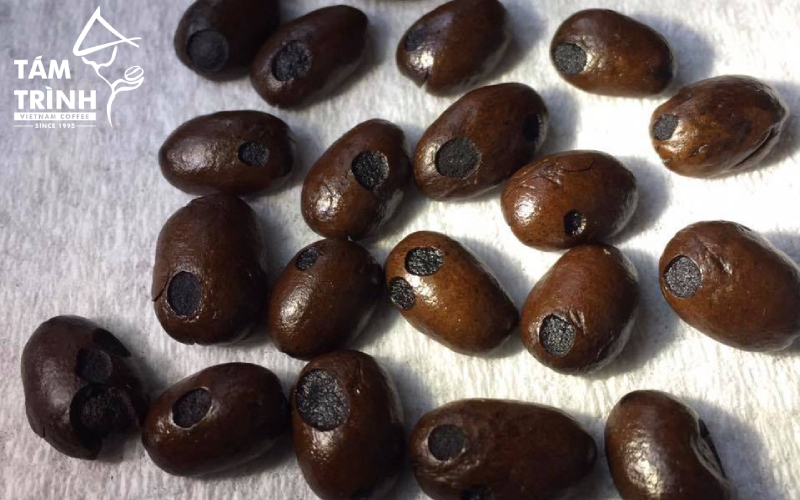
Scorched Coffee
Cause: Charge temperature too high or drum rotation too slow.
Characteristics:
- Black scorch marks on bean surfaces
- Interior remains underdeveloped
Solution: Reduce charge temperature or increase drum speed.
Underdeveloped Coffee
Cause: Roast ended too early or DTR too low.
Characteristics:
- Sharp acidity
- Grassy aroma
- Astringent aftertaste
Solution: Extend development time after the first crack.
Quality Control (QC) After Roasting
For export businesses like Tám Trình Coffee, roast consistency is crucial for maintaining reputation.
Cooling
High-powered cooling fans immediately stop the roasting process to prevent unwanted carryover roasting caused by residual heat.
Color Measurement
Agtron spectrophotometers are used to ensure roast color remains within acceptable tolerances compared to the master sample.
Cupping Verification
Coffee experts evaluate aroma and flavor through cupping to confirm the roast profile meets standards before packaging.

Conclusion
Understanding the coffee roasting process helps businesses and consumers maximize the value of coffee from farm to cup.
The combination of modern roasting technology and extensive roasting expertise is the key to creating competitive pure roasted coffee products for international markets.
Looking for a reliable coffee supplier? Contact the experts at Tám Trình Coffee for consultation on export-standard pure roasted coffee or customized professional roasting solutions tailored to your needs.
FAQ: Coffee Roasting Process
What is pure roasted coffee?
Pure roasting is a completely natural roasting technique without additives or artificial flavorings, preserving the original flavor of the coffee bean.
Why do dark roasted beans have oil on the surface?
At high roasting temperatures (Dark Roast), the bean’s cell structure breaks down significantly, causing natural oils (lipids) to rise to the surface.
How long is coffee best stored after roasting?
Coffee reaches optimal flavor after degassing for 7–10 days and should ideally be consumed within 45 days to prevent aroma oxidation.