


Vietnamese Arabica Coffee: Characteristics, Flavor Profile, and Growing Regions
When people talk about Vietnamese coffee, they often think of Robusta, the famous coffee variety known for its bold, intense bitterness. However, there is another coffee variety that is gaining increasing attention for its clean and aromatic flavor: Arabica.
Vietnamese Arabica is gradually building its own identity in the international market thanks to suitable natural conditions, improved farming techniques, and strong development potential in the high-quality coffee segment, especially specialty coffee.
From highland regions such as Da Lat, Son La, and Dien Bien, Vietnamese Arabica coffee offers a wide range of flavor profiles, including bright acidity, gentle sweetness, and distinctive notes of fruit, flowers, and herbs. These qualities contribute to increasing the value of Vietnamese coffee beans on the global coffee map.
What Is Arabica Coffee?
Arabica coffee, scientifically known as Coffea arabica, is the most widely recognized and highly valued coffee species in the world in terms of flavor.
Arabica is usually cultivated at elevations ranging from 800 to 2,200 meters above sea level (masl), where the climate is cool and the day-night temperature range is wide. These conditions allow coffee cherries to ripen more slowly, accumulate more natural sugars, and develop more complex aromatic compounds inside the coffee beans.
Compared with Robusta, Arabica has a lower caffeine content, usually ranging from 1.1% to 1.5%, which creates a softer drinking experience. This coffee variety stands out for its rich aroma, bright acidity, natural sweetness, and refined aftertaste.
In the international coffee supply chain, Arabica plays a key role as the main raw material for specialty coffee, premium roasted coffee, and high-quality espresso products. Arabica is also used as a base blend component in many formulations to enhance flavor complexity, increase aroma, and create balance in the final product. This is why Arabica is always a preferred choice among roasters and premium coffee brands around the world.
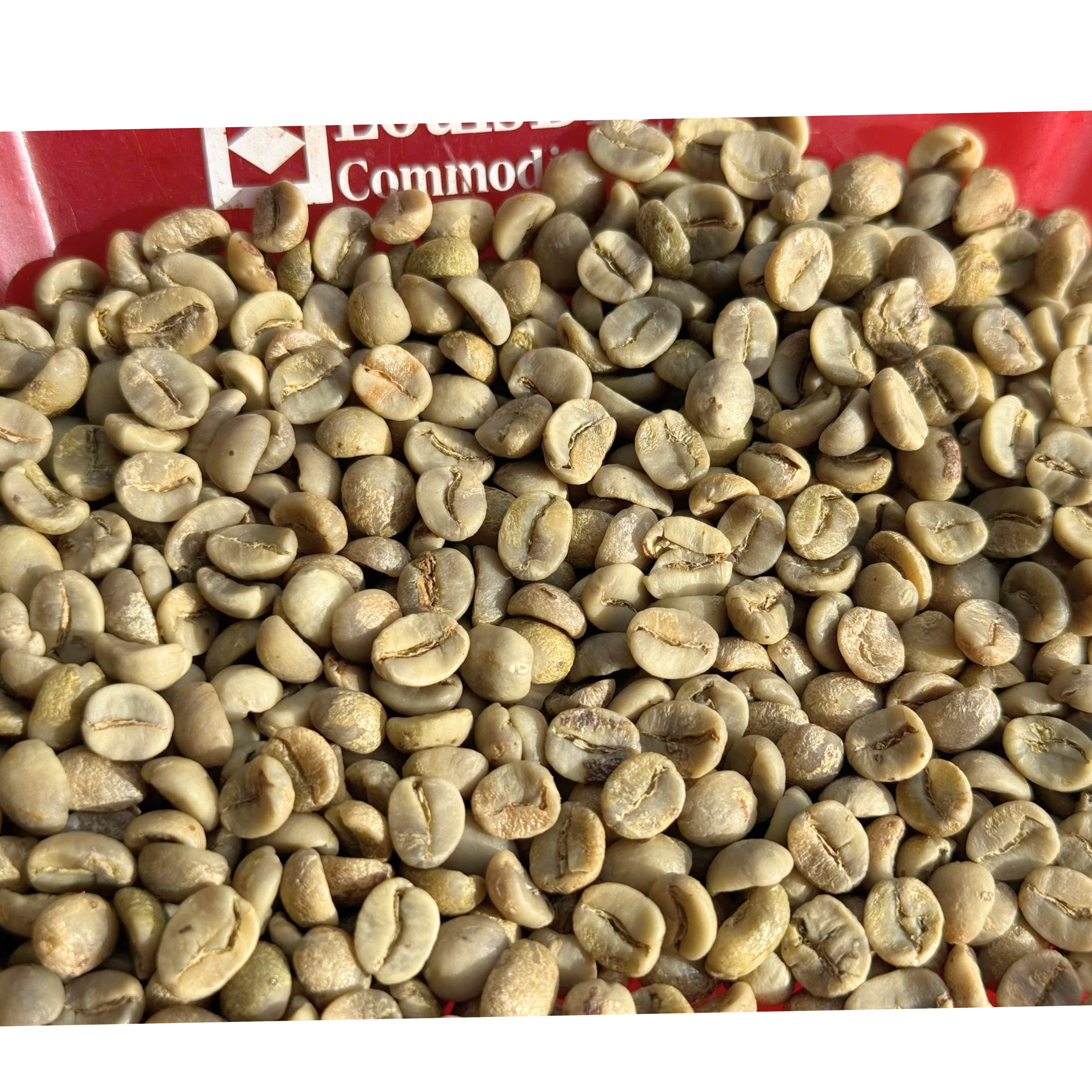
In Vietnam, although Arabica accounts for a smaller share of production and cultivated area, it is steadily growing in highland regions with suitable climates such as Lam Dong, Son La, and Dien Bien.
Technical Characteristics of Vietnamese Arabica Coffee
Biologically, Arabica in Vietnam, mainly the Catimor variety, is optimally cultivated in high mountain areas from 1,000 to 1,600 meters above sea level, where the climate is cool, rainfall is abundant, and the soil has good drainage. Because Arabica is more sensitive to weather and less resistant to pests and diseases than other coffee species, it requires stable growing conditions.
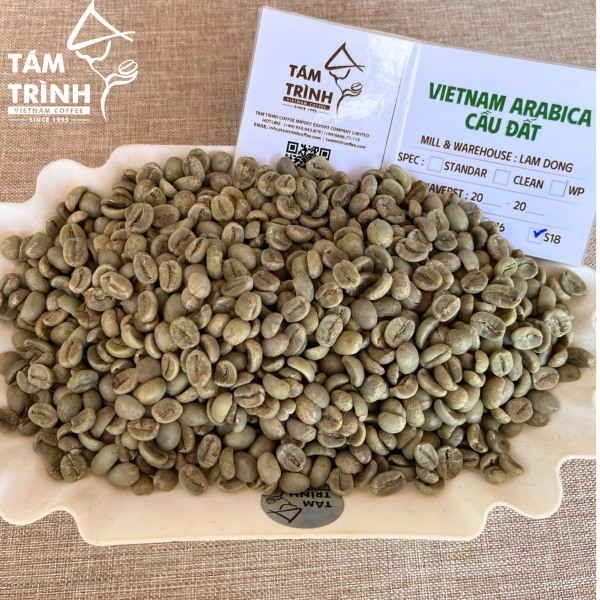
Vietnamese Arabica beans are more elongated and balanced in shape compared with Robusta. The most recognizable feature is the center cut, which often appears as an S-shaped or naturally curved line, while Robusta beans usually have a straighter center cut. Arabica beans are generally larger, flatter in structure, and have higher bean density when cultivated in suitable high-altitude regions.
Depending on the variety and production area, Vietnamese Arabica is commonly classified by screen sizes such as Screen 16, Screen 17, and Screen 18.
Technical Cupping Profile and Sensory Attributes
The flavor of Vietnamese Arabica is quite diverse depending on growing region, elevation, and processing method. For export markets, Vietnamese Washed Arabica is highly valued by international roasters thanks to its complex acidity structure and superior clean cup quality.
Acidity:
Vietnamese Arabica has bright, elegant acidity, often described as bright citric or phosphoric acidity, evoking the impression of ripe citrus fruits.
Body and Sweetness:
It typically has a medium body, a smooth cup, and finishes with a clean, sweet aftertaste that lingers without leaving astringency or dryness on the palate.
Aroma Notes:
Depending on the roast profile, Arabica beans release rich aromatic layers, ranging from delicate floral notes and tea-like herbal aromas to deeper notes of wild honey and dark chocolate at medium-dark roast levels.
Main Arabica Coffee Growing Regions in Vietnam
Lam Dong
Arabica in Lam Dong is often considered the heart of Vietnamese Arabica. In particular, Cau Dat in Da Lat is one of the most famous Arabica-growing regions in Vietnam. At elevations above 1,500 meters above sea level, with a cool climate and frequent fog, Cau Dat provides highly favorable conditions for Arabica to develop high quality.
The flavor of Arabica from this region achieves an excellent balance between fruity acidity and the rich aroma of nuts, with a clean aftertaste that creates a memorable tasting experience.
Many farms in Lam Dong are now applying international sustainable farming standards. As a result, Arabica from this region often has good aroma, balanced flavor, and is highly valued by many specialty roasters.
Son La
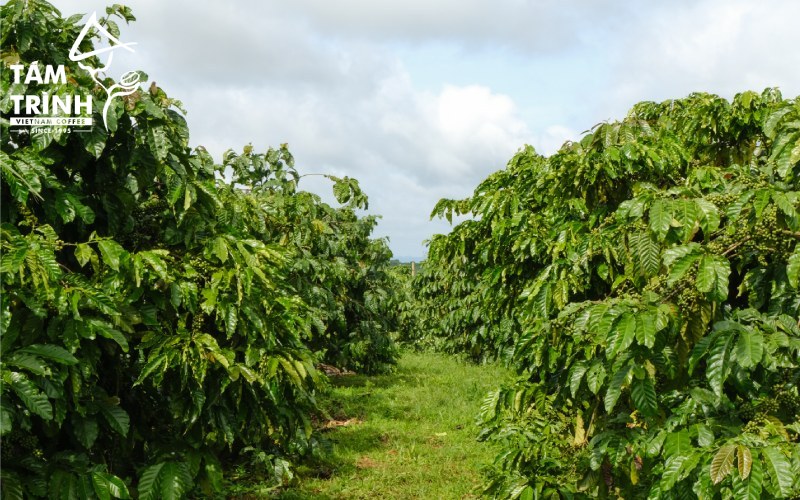
Son La is the second-largest Arabica-producing region in Vietnam and the most prominent Arabica region in Northern Vietnam. Its common cultivation elevation ranges from 800 to 1,200 meters above sea level, with some areas reaching above 1,300 meters. The mountainous terrain, cool climate, and wide day-night temperature range help coffee cherries develop more slowly, producing beans with relatively good density and stable quality.
Son La Arabica often shows light to medium citric acidity, medium body, a clean finish, and notes of herbs, black tea, and roasted nuts. Well-processed lots may also show light floral notes and brown sugar sweetness.
With large production volume and a stable supply over many years, Son La now plays an important role in supplying large-volume commercial Arabica to international markets. Thanks to its balanced profile, competitive cost, and stable supply capacity, Son La Arabica is often used by industrial roasters as a base blend component to add bright acidity, aroma, and cost efficiency compared with using only Arabica from higher-cost origins such as Colombia or Central America.
Dien Bien
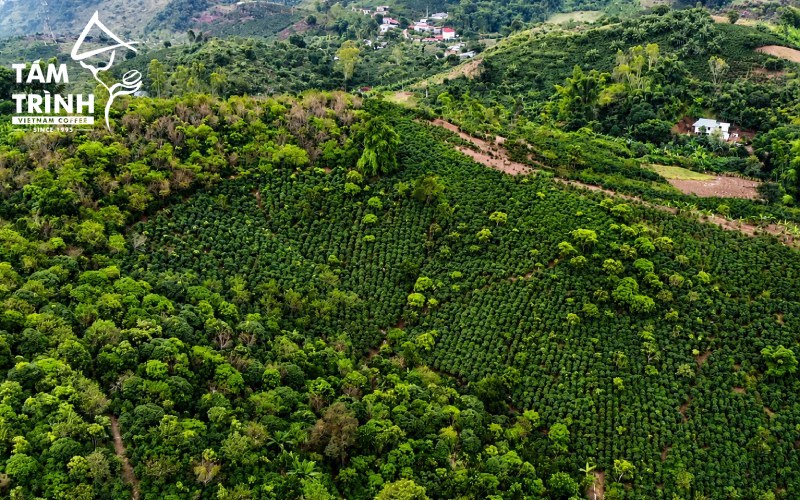
Dien Bien is one of the Arabica regions with the most favorable natural conditions in Northwest Vietnam, with common cultivation elevations from 900 to 1,400 meters above sea level. Its year-round cool climate and mineral-rich soil help coffee trees grow steadily and produce beans with higher density than many other Arabica regions in Vietnam.
Dien Bien Arabica often has clear bright acidity, with notes of citrus, yellow fruits, and light caramel. It has a medium body, balanced structure, and clean aftertaste. Well-harvested and well-processed lots can achieve profiles suitable for the entry-level specialty segment.
For international roasters, Dien Bien Arabica is often used to increase brightness and flavor complexity in espresso blends or filter coffee.
Quang Tri
Quang Tri is an Arabica-growing region in Central Vietnam, especially the Khe Sanh area. Although its cultivated area is not as large as the Central Highlands or Northwest regions, Quang Tri Arabica has strong potential thanks to its unique climate conditions.
Located at elevations from 600 to 800 meters and influenced by hot, dry Lao winds alternating with humid monsoon winds, Khe Sanh Arabica often has a medium to full body, low to medium acidity, and notes of wood, cacao, roasted nuts, and dried herbs.
Thanks to its good body and moderate acidity, Khe Sanh Arabica is often used as a base blend in commercial espresso products or blended with higher-acidity Arabica to create balance in the final product.

Common Arabica Varieties in Vietnam
Catimor
Catimor is an Arabica variety crossed between Timor Hybrid and Caturra, accounting for more than 90% of Vietnam’s Arabica growing area. This variety has a strong root system, good disease resistance, and stable yield.
When processed through a standardized Washed process at the factory, Vietnamese Catimor Arabica achieves a clean cup, light body, mild citric acidity, and distinctive tea-like and herbal notes. It is a cost-efficient raw material solution favored by global industrial roasters as a blending base, helping enhance aroma in espresso without significantly increasing production costs.
Bourbon
Bourbon is one of the oldest coffee varieties in the world, introduced to Vietnam by the French in the last century. Bourbon is highly sensitive to weather and therefore extremely difficult to cultivate. It offers a buttery and chocolate-like aroma, good sweetness, and a smooth aftertaste.

Typica
Along with Bourbon, Typica is one of the original Arabica varieties in the world. Typica beans have a slender shape and deliver a clean, refined flavor with malic acidity similar to green apple. Due to low yield and difficult cultivation, Typica in Vietnam is currently considered a premium product line and is often purchased by roasters at higher prices.
Vietnamese Arabica Processing Methods
Washed Arabica
Washed processing is a common method for specialty Arabica. After harvesting, coffee cherries are depulped, soaked, fermented, and then dried.
Washed Arabica usually has a high clean cup quality, bright acidity, medium body, and clean finish. Common flavor notes include citrus, green apple, white flowers, black tea, or light caramel depending on the growing region. This processing method expresses terroir, or growing-region characteristics, more clearly than other Arabica processing methods.
Washed Arabica is one of the most sought-after product lines among specialty roasters, premium coffee chains, and importers in Europe, the United States, Japan, and South Korea. Thanks to its high clarity and profile that is easy to evaluate on the cupping table, Washed Arabica is often used for single origin, specialty coffee, pour-over, and premium espresso products. It is also the highest-value export product within the commercial and specialty Arabica category.
Natural Arabica
Natural processing is the method of drying whole coffee cherries after harvest. The slow drying process allows natural sugars from the fruit skin and pulp to penetrate deeply into the coffee bean.
Natural Arabica usually has a medium-full body, high sweetness, low to medium acidity, and a long aftertaste. Common flavor notes include ripe tropical fruit, berries, raisins, molasses, chocolate, and caramel.
Natural Arabica is widely used by many roasters to increase sweetness, body, and flavor depth in blend formulas. In the international supply chain, this product line has higher added value than regular commercial Arabica and is often traded at a significant premium when quality is stable.
Honey Arabica
Honey processing is a method in which the outer skin is removed while a certain amount of mucilage remains around the bean during drying.
Honey Arabica usually has a medium to full body, high sweetness, soft acidity, and a smooth mouthfeel. Flavor notes often include caramel, honey, brown sugar, ripe fruit, and milk chocolate. The aftertaste is longer and more balanced compared with the Natural process.
Honey Arabica is considered a high-value product in the specialty coffee segment because it balances clean cup quality with sweetness. This coffee type attracts strong interest from specialty importers in Europe, North America, and East Asia because it matches the consumer trend toward naturally sweet coffee and complex flavor experiences.

>> See More: Technical Analysis of the Professional Coffee Roasting Process
How Is Vietnamese Arabica Different from Vietnamese Robusta?
Arabica and Robusta are the two most common coffee species in Vietnam, but they have clear differences.
| Criteria | Arabica | Robusta |
| Flavor | Clean, aromatic, mildly acidic | Bold, strong, clearly bitter |
| Caffeine Content | Lower | Higher |
| Body | Moderate | Fuller |
| Aroma | More complex | Stronger and simpler |
| Common Segment | Specialty coffee | Espresso blends, instant coffee |
| Growing Conditions | High elevation, cool climate | More adaptable |
Arabica is often suitable for those who enjoy refined flavors, while Robusta is better suited for people who prefer a stronger and bolder coffee taste.
Development Potential of Vietnamese Arabica Coffee
Entering 2026, the global coffee market is witnessing the strong rise of high-quality and sustainable consumption trends. Buyers do not only want to drink a good cup of coffee; they also want to know where the coffee was grown, whether it harms the environment, and whether farmers are paid fairly.
This opens a major opportunity for Vietnamese Arabica as many producing regions are improving quality, upgrading processing methods, and building regional brands. Areas such as Da Lat, Cau Dat, and Son La are becoming increasingly recognized by the international coffee community thanks to their stable quality and distinctive flavor profiles.
Because of this, Vietnamese Arabica is gradually moving beyond the image of “low-cost coffee” and confidently entering the global specialty coffee segment, affirming Vietnam’s position as a country that is not only strong in quantity but also capable of reaching high standards in quality.
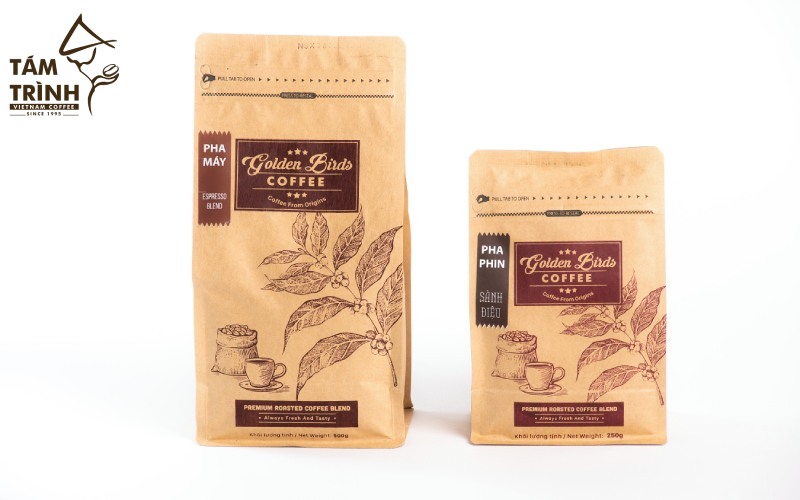
>> If you are interested in purchasing Green Coffee Beans, please contact Tam Trinh Coffee immediately.
Tam Trinh Coffee: Coffee Processing Factory in Lam Dong
With more than 30 years rooted in the basalt land of Lam Dong, Tam Trinh Coffee is proud to be one of the pioneering companies preserving and elevating the value of local Arabica coffee beans. Operating under a sustainable closed-loop model, Tam Trinh Coffee is a deep-processing factory for Arabica green coffee beans in Vietnam, especially in the premium Arabica segment. With modern technology infrastructure, Tam Trinh Coffee optimizes roasting profiles through different processing methods, from Natural and Washed to Honey Process.
In addition, Tam Trinh Coffee brings the culture of “honest coffee” to life through strong strategic partnerships with more than 3,000 local farming households in the Central Highlands. The company also maintains strict control from hand-picking ripe cherries to deep processing using modern machinery and equipment. This helps stabilize supply volume and meet the European Union Deforestation Regulation (EUDR).
This direction also helps increase the value of Vietnamese coffee in the international market through quality, culture, and growing-region stories, supporting Vietnam’s role as a long-term strategic partner for domestic and international roasting groups.
FAQ: Vietnamese Arabica Coffee
What is Vietnamese Arabica coffee?
Vietnamese Arabica coffee is coffee from the species Coffea arabica, grown in highland regions with cool climates such as Lam Dong, Cau Dat, Son La, Dien Bien, and Quang Tri.
Does Vietnam grow Arabica coffee?
Yes. Vietnam grows Arabica coffee. Although its production volume is lower than Robusta, it has strong potential in the specialty coffee and premium coffee segments.
What does Vietnamese Arabica coffee taste like?
Vietnamese Arabica usually has a light aroma, bright acidity, and a sweet aftertaste, with notes such as flowers, fruit, citrus, honey, caramel, or chocolate.
Where is Vietnamese Arabica coffee mainly grown?
Vietnamese Arabica is grown in Lam Dong, Cau Dat in Da Lat, Son La, Dien Bien, and Quang Tri.
How is Vietnamese Arabica different from Vietnamese Robusta?
Vietnamese Arabica is usually more aromatic, brighter in acidity, lower in caffeine, and suitable for specialty coffee. Vietnamese Robusta is bolder, fuller-bodied, higher in caffeine, and suitable for instant coffee, espresso blends, and commercial roasting.
What products is Vietnamese Arabica suitable for?
Vietnamese Arabica is suitable for specialty coffee, filter coffee, premium roasted coffee, single origin, espresso blends, and OEM/private label products.
Does Tam Trinh Coffee supply Arabica green coffee beans?
Yes. Tam Trinh Coffee is a coffee processing factory in Lam Dong, specializing in supplying and exporting Arabica and Robusta green coffee beans.