


Post-Harvest Coffee Processing Stages
In the coffee industry, post-harvest processing is a critical link that helps enhance product quality and meet international standards. A well-structured processing system not only preserves the natural characteristics of coffee beans but also increases competitiveness in the marketplace. To better understand the post-harvest coffee processing stages, please refer to the information below.
Post-Harvest Coffee Processing in the Industrial Supply Chain
Post-harvest coffee processing is a series of physical, chemical, and biological operations that transform freshly harvested coffee cherries into green coffee beans. The resulting product is suitable for storage, transportation, and roasting.
The process is generally divided into two main stages:
Stage 1: Primary Wet or Dry Processing at Origin
Depending on the selected processing method—Natural, Washed, or Honey—the freshly harvested cherries are sorted and undergo controlled biological fermentation to develop distinctive cup profiles. The product at the end of this stage is dried coffee with a safe moisture content.
Stage 2: Industrial Dry Milling at the Main Processing Facility
The semi-processed coffee is transported to the factory, where it passes through a fully mechanized production line. This includes hulling parchment and silver skin, grading bean sizes according to commercial standards (Screen 16/18), density separation, and Laser Optical Color Sorting to reduce defects to strict specifications (Grade 1 ≤ 1%).
Why Is Post-Harvest Processing Important?
Post-harvest processing plays a crucial role for the following reasons:
1. Directly Influences Coffee Flavor
Each processing method creates a unique flavor profile within the coffee bean. In addition, biological fermentation and drying speed significantly influence the formation of organic compounds, sugar content, and acidity levels.
For example, a well-controlled process can highlight the natural acidity of Arabica coffee, increase sweetness, and create a fuller body in Robusta coffee. Conversely, even a small mistake during processing can result in mold contamination and undesirable flavors.
2. Determines Green Coffee Quality
Post-harvest processing is essential because it directly determines the quality of green coffee beans.
High-quality green coffee should have a uniform appearance, be free from cracks, and show no signs of mold. The processing stages remove defective beans, floaters, black beans, and damaged beans.
Proper control of microbiological and mechanical factors during processing helps create a uniform bean structure, allowing for more efficient heat transfer during roasting and greater roasting consistency.
3. Increases Commercial Value
The global coffee market, especially the premium segment, applies strict quality standards.
Coffee that is professionally processed, supported by a clear processing protocol, and achieves high cupping scores can command significantly higher market value.
Instead of selling low-value, unprocessed coffee, farms and processing facilities that implement standardized post-harvest procedures can export coffee at prices up to three times higher, generating more sustainable profitability.

4. Reduces Storage and Transportation Risks
Fresh coffee cherries contain approximately 60–70% water and can easily deteriorate or undergo uncontrolled fermentation within 12–24 hours after harvesting.
Processing and drying reduce moisture content to safe levels, slowing biochemical reactions and inhibiting the growth of mold and harmful microorganisms.
As a result, green coffee can be safely stored for extended periods in specialized packaging without compromising quality.
Overview of Post-Harvest Coffee Processing Stages
To produce high-quality green coffee beans, every batch of coffee must go through the following stages.
Stage 1: Harvesting and Receiving Coffee Cherries
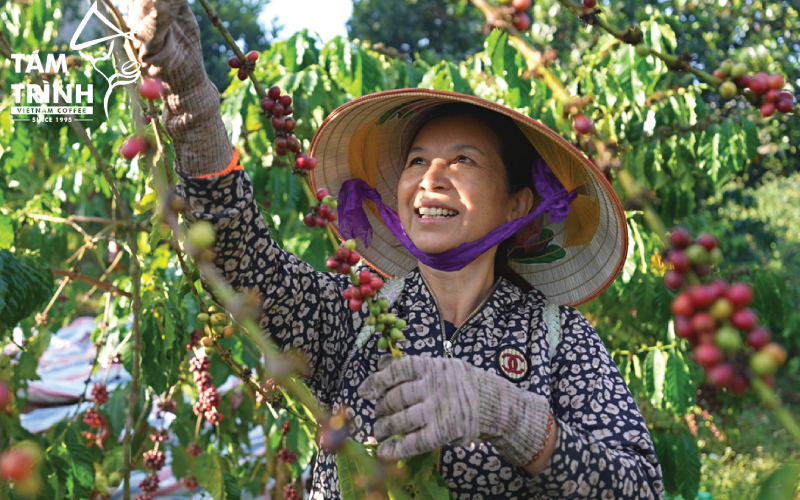
The first stage is harvesting and receiving coffee cherries. The ideal harvest time is when the cherries reach optimal ripeness, displaying a bright red or yellow color depending on the variety.
Selective hand-picking of ripe cherries helps minimize the proportion of green cherries. After harvesting, fresh cherries should be transported to the processing facility within a maximum of 12 hours to prevent unwanted fermentation under sunlight.
Stage 2: Sorting Incoming Coffee Cherries
Upon arrival at the processing facility, fresh coffee cherries are poured into sorting tanks.
At this stage, mechanical impurities such as leaves, branches, and stones are removed. Water channels and mechanical sorting systems then separate:
- Fully ripe cherries
- Green or partially ripe cherries
- Dried cherries and insect-damaged cherries
Stage 3: Washing and Cleaning Raw Materials
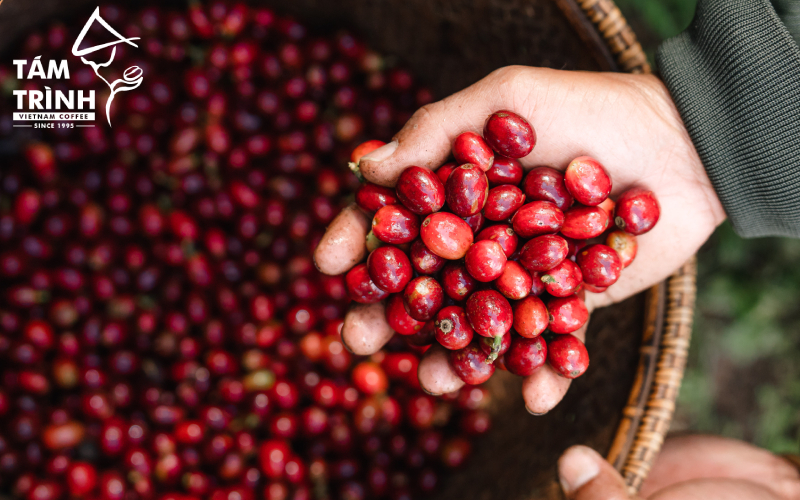
After preliminary sorting, the coffee cherries pass through washing tanks or pressure-washing systems.
This stage removes dirt, dust, and microorganisms attached to the cherry skin while separating insect-damaged and floating cherries. Dense, fully developed cherries sink and proceed to the next stage.
Stage 4: Selecting the Coffee Processing Method
This is the most important stage, shaping the future identity and flavor profile of the coffee.
Depending on the coffee variety, weather conditions, and production objectives, one of the following three processing methods is selected.
Method 1: Natural Processing
After washing, the cherries are dried whole with both skin and fruit pulp intact. They are spread evenly on drying beds or patios and dried naturally under sunlight.
This method typically produces coffee with:
- Intense tropical fruit notes
- Deep sweetness
- Heavy and silky body
Method 2: Washed Processing
In the Washed process, coffee cherries pass through a pulping machine that removes the outer skin.
The beans are then fermented in water tanks or dry-fermentation systems to completely break down the mucilage surrounding the parchment.
After fermentation, the beans are thoroughly washed and dried.
This method produces coffee with:
- Clean cup quality
- Bright acidity
- Elegant floral aromas
- Minimal fermentation-related off-flavors
Method 3: Honey Processing
Honey processing combines elements of both Natural and Washed methods.
The outer skin is mechanically removed, but part or all of the sugary mucilage is intentionally retained before drying.
Depending on the amount of mucilage retained and drying conditions, Honey coffee is classified into:
- White Honey
- Yellow Honey
- Red Honey
- Black Honey
Coffee processed using this method offers an excellent balance between the bright acidity of Washed coffee and the sweetness and body of Natural coffee.
Stage 5: Coffee Fermentation
For Washed and Honey coffees, fermentation utilizes natural enzymes, yeast cultures, or lactic acid bacteria to break down complex compounds within the fruit pulp into organic acids and aroma precursors.
Fermentation typically lasts between 12 and 36 hours and must be carefully controlled for temperature and pH to prevent over-fermentation that may create vinegar-like or unpleasant odors.
Stage 6: Drying Coffee
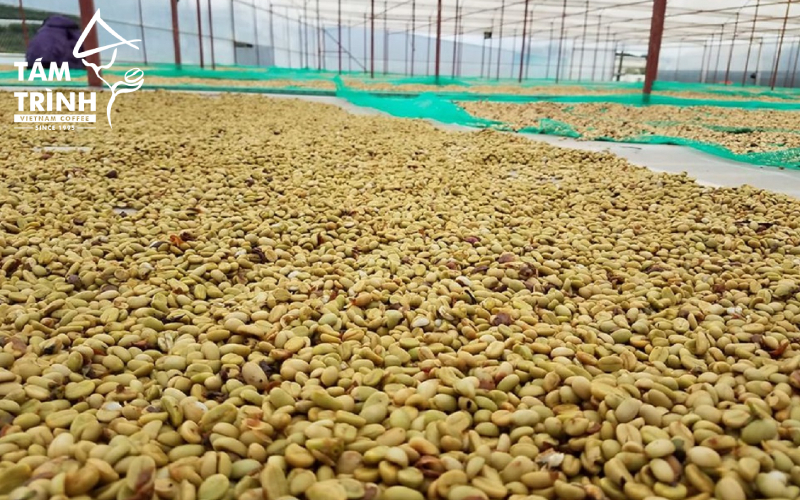
The objective of this stage is to reduce moisture content from approximately 50–60% to a safe level of 11–12.5%.
Natural Drying
Coffee is spread on raised drying beds or greenhouse drying systems to protect it from rain and dew.
Workers must regularly turn the coffee every 30–60 minutes to ensure even drying and prevent uneven moisture distribution.
Mechanical Drying
In regions with high humidity or prolonged rainfall, coffee is mechanically dried.
Drying temperatures are strictly controlled to avoid damaging the embryo inside the bean or weakening the protective outer layers.
Stage 7: Resting and Stabilization After Drying
Once the coffee reaches the target moisture level of 11–12.5%, it is not immediately hulled.
Instead, it is stored in clean bags, silos, or dedicated storage facilities for approximately 4–8 weeks.
This resting period allows moisture inside the bean and outer layers to reach biological equilibrium.
Stage 8: Hulling and Parchment Removal
After resting, the coffee enters the dry milling line.
Machines use friction and centrifugal force to gently remove dried fruit skins or parchment layers, revealing the green coffee beans inside.
High-capacity air systems remove husks and dust from the coffee mass.
Stage 9: Green Coffee Bean Grading
After hulling, green coffee beans pass through multiple grading systems to achieve maximum uniformity.
Size Grading
Coffee is screened using standardized mesh sizes to ensure uniform bean size, promoting even roasting.
Density Grading
Density separators use airflow to remove lightweight, porous, or insect-damaged beans while retaining dense, mature beans.
Color Sorting
Premium coffee lots are processed through digital color sorters.
High-speed cameras identify defective beans such as moldy, black, yellow, or foreign materials, which are then removed using compressed air.
Stage 10: Quality Inspection Before Packaging
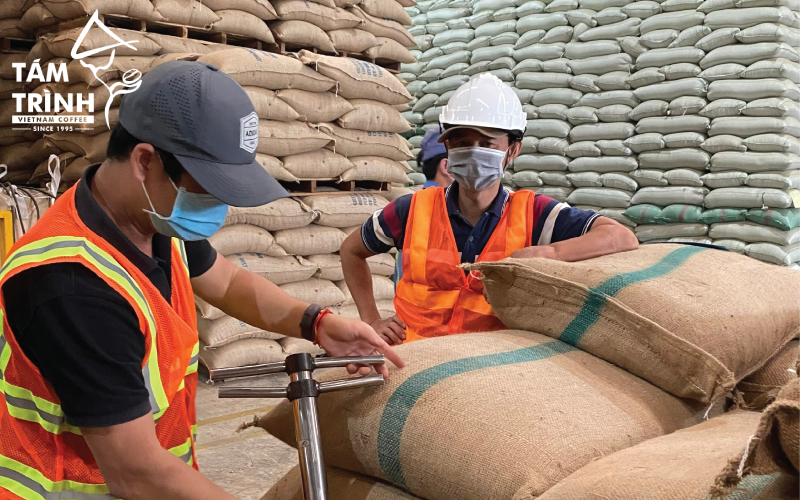
Before shipment, the factory’s Quality Control (QC) team collects random samples from each lot.
The samples undergo two key evaluations:
Physical Analysis
- Moisture measurement using specialized equipment
- Defect counting according to Specialty Coffee Association (SCA) standards or Vietnamese standards (TCVN)
Sensory Evaluation
Certified coffee tasters roast, grind, and cup the samples according to standard protocols to evaluate:
- Aroma
- Flavor
- Aftertaste
- Acidity
- Balance
Stage 11: Green Coffee Packaging
The next stage is green coffee packaging.
This step protects coffee from external environmental impacts.
Green coffee is typically packed in:
- GrainPro bags
- Specialized moisture-barrier liners
These are then placed inside durable jute sacks.
Standard packaging weights are generally 60 kg or 30 kg, depending on customer requirements.
Stage 12: Storage and Preparation for Shipment
Finished coffee bags are neatly stacked on wooden pallets positioned at least 20 cm above the floor and 50 cm away from walls in well-ventilated warehouses.
Storage conditions should maintain:
- Temperature: 20–25°C
- Relative humidity: below 60%
Inventory is regularly inspected during storage.

How Does Tám Trình Coffee Control Post-Harvest Processing?
With its rich coffee-growing regions in Lam Dong Province, Tám Trình Coffee is proud to be one of the pioneers applying a closed-loop quality control model from farm to export-ready green coffee beans.
Farm Standards
Tám Trình Coffee works closely with farmers, promoting sustainable agricultural practices and minimizing the use of chemical crop protection products.
Cherry Ripeness Standards
The company commits to hand-picking coffee with a ripeness rate of 95% or higher for premium product lines.
Processing Technology
The factory is equipped with water-saving centrifugal pulping machines and modern greenhouse drying systems that completely isolate coffee from dust and insects.
Controlled Fermentation
Tám Trình applies anaerobic and temperature-controlled fermentation techniques to optimize flavor development in both Arabica and Robusta coffees.
Professional Quality Team
Quality inspections at Tám Trình Coffee are conducted rigorously by internationally certified experts.

Conclusion
As outlined above, post-harvest coffee processing is a long and meticulous journey that requires scientific precision and strict attention to detail. Mastering each stage of the process helps preserve the finest characteristics of the coffee bean while creating sustainable value throughout the supply chain.
Tám Trình Coffee is proud to provide internationally standardized green coffee beans, contributing to the growing reputation of Vietnamese agricultural products on the global coffee map.
FAQ: Post-Harvest Coffee Processing Stages
What are the main post-harvest coffee processing stages?
The main stages include harvesting, receiving cherries, sorting, washing, processing, fermentation, drying, stabilization, hulling, green coffee grading, quality control, packaging, and storage.
What are the most common coffee processing methods?
The three most common methods are Natural, Washed, and Honey. Each method produces different flavor profiles, body characteristics, and cup cleanliness.
What is Natural processing?
Natural processing involves drying whole coffee cherries. This method generally creates a heavier body, higher sweetness, and ripe fruit flavors.
What is Washed processing?
Washed processing removes the skin and fruit pulp before drying. It typically produces a cleaner, brighter, and more consistent cup profile.
What is Honey processing?
Honey processing removes the outer skin while retaining part of the mucilage during drying, resulting in increased sweetness, body, and complexity.
Why is moisture content important in green coffee?
Moisture directly affects storage stability, transportation, and roasting performance. Improper moisture levels can lead to mold growth, quality deterioration, and inconsistent roasting results.
What coffee products does Tám Trình Coffee offer?
Tám Trình Coffee processes and supplies Robusta and Arabica green coffee beans using Natural, Washed, and Honey processing methods for B2B and export markets.